

On a commercial flat roof, sealed joints and edges quietly do their job until the day they fail. Flat roof sealing keeps those vulnerable points watertight, and it works best as part of a steady maintenance routine rather than a scramble after a leak. Anderson Industrial Roofing helps McKinney building owners stay ahead of that curve.
Call Anderson Industrial Roofing at (866) 949-8016 for flat roof sealing in McKinney, TX.
Scheduling Flat Roof Sealing
Sealant is not a permanent material. It is a flexible filler at the joints of a roof, and it ages under sun, heat, and constant expansion and contraction. Treated as a scheduled task, resealing catches that aging early and keeps the roof’s defenses intact. Treated as an emergency, it becomes a rushed repair after water is already inside.
A regular maintenance schedule also spreads the work out. Instead of one large failure that forces a big repair, small touch-ups keep the roof steady year over year. That predictability is easier to budget and far easier on the building below. Owners who plan sealing this way rarely face a sudden interior leak during the busiest stretch of the year.
McKinney’s long cooling and heating seasons push roof materials through daily movement. Sealing on a schedule accounts for that movement before it opens a gap.
Where Flat Roof Sealing Matters Most
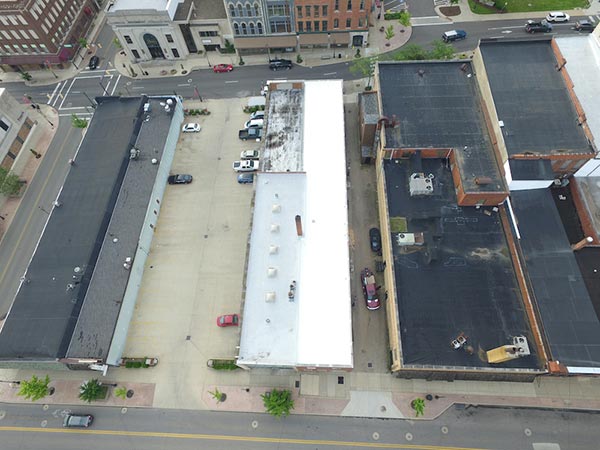
The field of a flat roof is usually the last place to fail. The trouble starts at the transitions. Seams where membrane sheets overlap are often the first to loosen as adhesives age, so sealing them helps keep the laps tight.
Flashing terminations, where the roof meets walls, curbs, and parapet edges, take constant stress from movement and wind. These points need regular sealant attention because they flex more than the flat field does. Penetrations, the spots where pipes, vents, and equipment supports pass through the roof, are another priority, since every one of them is a hole that sealant keeps closed.
Parapet edges deserve their own look. Water driven sideways by wind collects along these raised borders, and worn sealant there lets it slip behind the edge, where it can track down the wall inside and surface far from its true source.
Folding Sealant Work into Routine Maintenance
The strength of a maintenance program is that sealing folds into a visit already happening. During a scheduled inspection, worn joints get refreshed on the spot, which means no separate service call and no waiting for a crew to return.
This is where small problems are stopped before they grow. A joint resealed this spring is a leak that never happens next winter. Left alone, that same joint lets water into the insulation, and a minor touch-up turns into replacing soaked material and stained ceilings.
Consistency is the whole point. A roof checked and resealed on a regular cycle rarely surprises its owner, because the failures are caught while they are still small.
McKinney Flat Roof Sealing Specialists
Sealing is not glamorous, but it is one of the most reliable ways to protect a commercial roof in McKinney. Folded into regular maintenance, it keeps the joints tight, the repairs small, and the maintenance budget steady instead of lurching from one emergency to the next.
For flat roof sealing in McKinney, TX, contact Anderson Industrial Roofing at (866) 949-8016 today.
FAQ
How often should the sealant on a commercial flat roof in McKinney, TX be inspected and refreshed?
A twice-yearly check, typically spring and fall, catches worn joints before they leak. Most sealed points benefit from refreshing every few years, sooner at high-stress spots.
Can sealant work be part of a routine maintenance visit, or does it need a separate call?
It fits naturally into a scheduled visit. Refreshing worn joints during an inspection avoids a separate service trip and keeps small issues from becoming repairs.
What are the signs that sealant on a flat roof has failed?
Look for cracked or pulling sealant at seams and flashing, staining below penetrations, and gaps along parapet edges. Any of these means water has a path in.