

Commercial roof inspections in Mesquite, TX are most useful when a building owner knows when to schedule one, how to prepare the building for the visit and what to do with the findings. Anderson Industrial Roofing, a family-owned commercial roofing contractor since 1993, provides commercial roof inspections for commercial properties, along with repair, maintenance, coatings and replacement. This page covers the practical side of an inspection from the owner’s chair.
Before an inspection, agree on how findings will be described, documented and prioritized. A visual roof check can identify visible issues, but hidden wet insulation or structural conditions may require a separately defined investigation. For a Mesquite commercial building, call Anderson Industrial Roofing at (866) 949-8016 to discuss the inspection scope.
When to Schedule a Commercial Roof Inspection
Mesquite buildings see long hot summers, spring thunderstorms, wind and occasional hail. Those conditions are hard on membranes, seams and flashings, so a calendar schedule works better than waiting for a leak. The table lists common reasons to schedule an inspection and what to ask.
| When | Why it matters | What to ask |
|---|---|---|
| After hail or high wind | Storm damage is not always visible from the ground, and punctures or displaced flashing can leak later | Whether the inspection covers the full roof surface and the date and extent of the storm being checked |
| Spring, before storm season | Finds weak seams, flashings and drains while repairs are easy to schedule | What is being checked and how findings will be prioritized |
| Fall, before winter | Confirms earlier repairs are holding and drains are clear | Whether prior repairs will be reviewed |
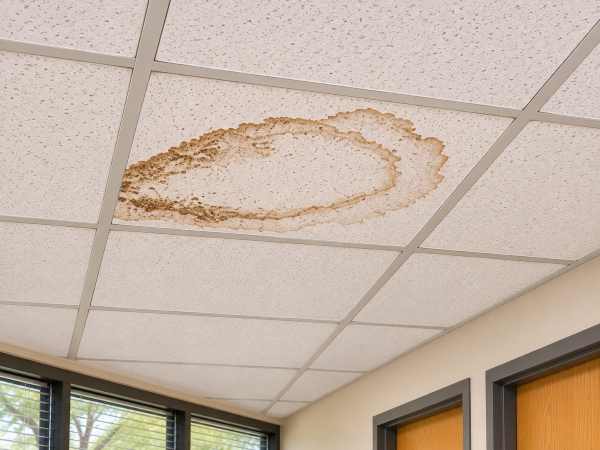
| Interior stain, drip or damp insulation | Water is entering somewhere, but a stain does not show the source or the extent | How the source and moisture extent will be investigated |
| Before buying, leasing or refinancing a building | Gives a documented picture of roof condition before a commitment | What the written report will include and how condition will be described |
| Before a warranty or maintenance review | Records condition for the file | Which documents the contractor needs to see |
Preparing for the Visit
Preparation keeps the inspection efficient and makes sure the findings are useful. It is mostly about access and records.
Access and Safety
Tell the roofing contractor how the roof is reached, whether by an interior hatch, a fixed ladder or an exterior ladder, and who holds the keys. Mention any areas with restricted access, fragile surfaces or rooftop equipment that must not be disturbed. Building staff should not climb onto the roof to check conditions themselves. Roof-level inspection is for a trained contractor.
Tenants and Operations
For occupied buildings, let tenants and staff know a contractor will be on the roof, especially if the work involves equipment areas or interior ceiling checks. Point out any interior leaks, stains or complaints, including the dates, so the contractor can compare them with what is found above.
Records to Gather
Pull together whatever you have: roof plans or drawings, past repair invoices, warranty documents, maintenance logs and photos of earlier damage. These help the contractor tell a new problem from a repaired one and show which roof system is on the building, such as TPO, PVC or EPDM, covered on the membranes page.
For a property with multiple roof sections, identify which areas are included: main low-slope roof, canopies, loading areas, additions and equipment platforms may have different surfaces and access arrangements. Request clarification if any area is excluded. If another trade recently installed a rooftop unit, record that work so penetrations and new curbs receive appropriate attention without assuming the work caused a leak.
What an Inspection Should Cover
- Roof surface and seams: punctures, splits, exposed reinforcement, open seams, fastener conditions and changes in a metal or membrane roof. The checklist varies by assembly.
- Flashing and penetrations: curbs, pipes, vents, drains, walls and edges, where many leaks begin.
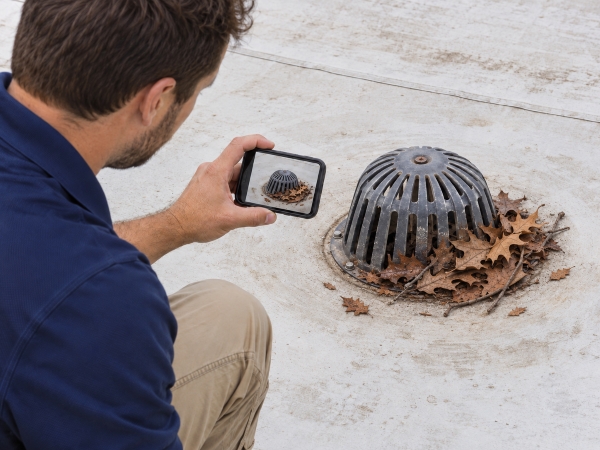
- Drainage: ponding patterns, visible drain or scupper obstructions, gutter outlets and whether roof additions interrupt runoff. Observing debris is not the same as confirming drain capacity.
- Rooftop equipment: how units are curbed and flashed and signs of traffic damage.
- Interior signs: stains, damp ceiling tiles and other evidence of moisture.
- Prior repairs: whether earlier fixes are holding.
An inspection identifies conditions and likely causes. It does not always prove what is happening inside the roof assembly, so a contractor may recommend further investigation, such as checking for wet insulation, when the evidence points that way.
Why Local Conditions Matter
North Texas heat causes membranes to expand and contract every day, spring storms test drains and flashings, and hail can damage a roof in ways that only show up as leaks weeks later. An inspection that notes the date of the last storm and the condition of drains and flashings gives the owner a baseline to compare against after the next event.
What the Inspection Cannot Establish by Sight Alone
A surface that appears intact does not establish whether the insulation underneath is dry. Water can travel within a roof assembly before a stain appears indoors. If inspection findings raise concern about concealed moisture, the contractor can explain whether a more detailed moisture assessment is appropriate, what roof types it suits, and whether the additional work is included in the agreed inspection. Thermal images and moisture readings each have limitations and should not be treated as automatic proof of a leak without appropriate confirmation.
Similarly, an inspection does not automatically establish the roof deck’s structural capacity, certify remaining roof life or satisfy a lender or insurer’s requirements. A concerning sign such as unusual roof deflection may call for a structural professional. Before a property transaction, confirm the required inspection and report scope with the party requesting it rather than assuming a standard visual review will meet its criteria.
From the Inspection to a Clear Follow-Up Plan
Divide observations into immediate water-entry or safety concerns, localized defects to price, and conditions to monitor. For each item, ask whether the finding is observed directly, inferred from other evidence, or still unconfirmed. That distinction matters when a proposed repair would disturb the roof or require further testing.
For an active leak, note the conditions when water appears, the interior location, and any recent work around rooftop units. If a repair is proposed, the scope should describe the affected roof area, compatible materials, necessary access, treatment of wet components if confirmed, and how the completed area will be checked. For routine wear, record the next review date and any cleaning or equipment coordination needed, rather than losing the item between inspection cycles.
Give facility staff a simple way to record new interior stains without going onto the roof. Keep previous reports with photographs and repair invoices so a later visit can compare the same locations instead of starting from scratch.
Using the Findings
A useful written summary identifies the areas actually examined, visible defects and their locations, limitations on access, and which findings need attention first. Photos or roof-area references can help future crews find an issue again; confirm the report format and any deliverables when the visit is arranged. A visible stain is evidence to investigate, not proof that an entire roof section is wet.
Inspection findings can lead to commercial roof repair for localized defects, a roof coating where the existing assembly is dry, sound and compatible, or roof replacement when the documented condition calls for a larger scope. The inspection does not itself authorize repairs; compare the evidence and written scope for each option. Anderson also describes its roof inspection and estimate services separately.
To discuss a commercial roof inspection for a Mesquite property with Anderson Industrial Roofing, call (866) 949-8016 and confirm the requested areas and report scope.
Frequently Asked Questions
How often should a commercial roof be inspected in Mesquite, TX?
Spring and fall checks are a common planning approach, with additional attention after major storms or leaks. Roof condition, site exposure, manufacturer guidance and existing maintenance terms determine the appropriate schedule.
Can building staff inspect the roof themselves?
Staff can watch for interior stains and visible drainage problems, but roof-level checks should be done by a contractor. Staff should not walk the roof.
What should a roof inspection report include?
Ask for identified roof areas, visible conditions, location references or photos where included, access limitations, repair priorities and next steps. Confirm the written-report format and any additional testing in advance.
What should I have ready before an inspection?
Roof access details, any warranty papers, past repair records, roof plans if you have them and notes on any interior leaks.