

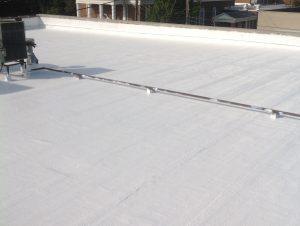
 Fort Worth commercial buildings spend significant energy keeping interiors cool through the region’s extended summer season, and the roofing system plays a direct role in how much work the HVAC equipment has to do. Roof coating in Fort Worth, TX applied over a flat commercial membrane can meaningfully reduce heat absorption and lower cooling loads during the months when energy costs run highest.
Call Anderson Industrial Roofing at (866) 949-8016 for roof coating in Fort Worth, TX.
How Roof Coatings Reduce Heat Absorption
An uncoated dark commercial roof membrane can reach extreme surface temperatures during peak summer days in Fort Worth, well above the ambient air temperature. This heat conducts through the roofing assembly into the building below, increasing the cooling load on the HVAC system. A reflective roof coating applied over the existing membrane bounces a substantial portion of solar radiation away from the surface before it can transfer into the building, reducing the thermal load at the roof level before it reaches the occupied space.
The effect is most pronounced during the hottest months, which in Fort Worth means an extended period from late spring through early fall. Rooftop temperatures during this window regularly drive interior comfort conditions and energy consumption. A coating that maintains its reflective performance over time delivers the most consistent energy benefit across the season, rather than providing strong performance in year one that degrades as the surface ages.
Reduced HVAC Demand and What It Means for Operating Costs
When a roof coating lowers the heat conducted into a commercial building, the HVAC system runs less to maintain set temperatures. For Fort Worth commercial properties with significant roof area such as warehouses, large retail buildings, office campuses, and distribution centers, the roof’s thermal contribution to cooling demand can be substantial. Reducing that contribution through a reflective coating translates into fewer HVAC run hours, lower electricity consumption, and reduced wear on mechanical equipment over time.
The energy benefit is ongoing rather than one-time. As long as the coating maintains its reflective surface in good condition, the building sees consistent reductions in cooling-related energy use each summer. This makes roof coating one of the few roofing investments where the return is realized year after year in operating costs, rather than only at the point of a weather event or system failure.
 Coating Selection and Energy Performance
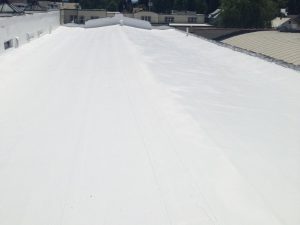
Not all roof coatings deliver the same energy performance. White and light-colored coatings, particularly silicone and acrylic formulations, achieve higher solar reflectance values than gray or darker alternatives. For Fort Worth commercial buildings where energy efficiency is a primary motivation for the coating project, specifying a product with high initial reflectance and a track record of maintaining that reflectance over time is an important part of the decision.
Coatings also vary in how well they retain reflective performance as they age. Some formulations attract airborne dirt more readily, which gradually reduces reflectance if the surface is not periodically cleaned. The right selection depends on the building’s drainage conditions, the existing membrane type, and the property owner’s maintenance preferences. A professional assessment can match the coating type to the building’s specific conditions rather than defaulting to a single product for every application.
Roof Coating in Fort Worth, TX
For Fort Worth commercial property owners, a reflective roof coating addresses one of the most persistent operational cost pressures that the region’s climate creates. Applied correctly over a sound existing membrane, it delivers energy savings, membrane protection, and the option to renew coverage through recoating at the end of the warranty period without a full replacement. For roof coating in Fort Worth, TX contact Anderson Industrial Roofing at (866) 949-8016 today.
FAQ
How much energy can a roof coating save on a commercial building in Fort Worth, TX?
The savings depend on the building’s size, insulation levels, HVAC efficiency, and the coating’s solar reflectance. Larger buildings with limited roof insulation in hot climates typically see the most meaningful reductions in cooling energy. A professional assessment of the roofing system and building conditions gives the most accurate picture of expected savings for a specific property.
How long does a roof coating maintain its reflective performance in the Fort Worth climate?
Most quality commercial roof coatings maintain meaningful reflective performance for 10 to 15 years, though surface dirt accumulation can reduce reflectance over time if not addressed. Periodic cleaning restores surface performance, and most coating systems can be recoated at the end of the warranty period to renew both weather protection and reflective properties without a full membrane replacement.
Can a roof coating be applied over any existing flat roofing membrane?
Usually, yes. Silicone and acrylic coatings can be applied over TPO, EPDM, modified bitumen, and built-up roofing, as long as the existing membrane is structurally sound and the surface is properly prepared. A professional inspection can confirm whether the roof is a good candidate for coating and identify any repairs needed beforehand.