

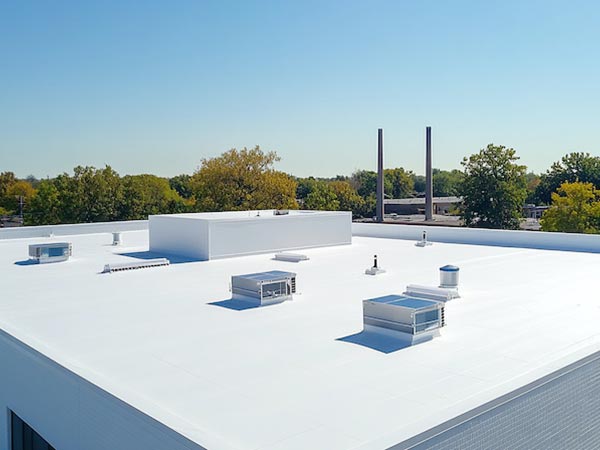
When a Grand Prairie commercial building keeps needing roof repairs, the roof is usually telling the owner something a patch cannot fix. A TPO roof installation, meaning a new single-ply thermoplastic membrane welded into one surface, is often the point where recurring problems finally stop instead of repeating.
Call Anderson Industrial Roofing at (866) 949-8016 for TPO roof installation in Grand Prairie, TX.
A New TPO Roof Installation Fixes Chronic Issues
Most owners do not replace a roof on a whim. They reach a new installation after years of chasing the same leaks, and the value of the new roof is measured by how many of those old problems it ends for good.
The repair cycle is the clearest one. When a membrane fails at its seams or its surface, patching may provide temporary relief, but recurring failures can continue to generate service calls. A new TPO roof installation with heat-welded seams and correct attachment removes the failure points that kept generating those service calls.
Cutting Cooling Costs with a Reflective Membrane
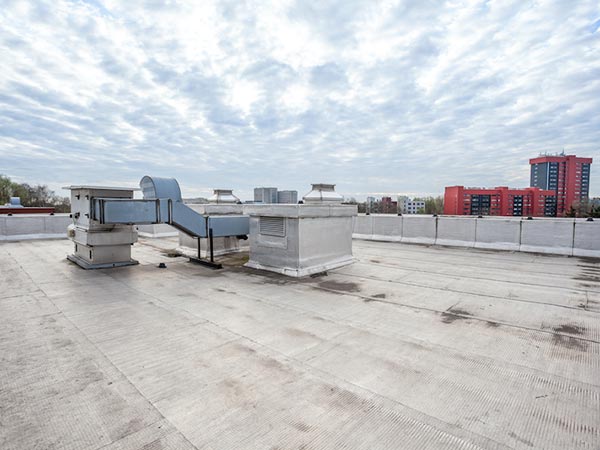
A second problem hides in the old roof’s color. A dark, aged membrane absorbs solar heat all afternoon and passes some of it into the building, which pushes the cooling system harder through a Grand Prairie summer.
A white TPO surface reflects a large share of that sunlight instead of holding it. Rooftop temperatures drop, and the air conditioning has less heat to fight. Reflectivity will not rewrite an energy bill by itself, though over the long summers here it takes real load off the equipment.
TPO Roof Installation Resets Drainage
Poor drainage rarely fixes itself, and a re-roof that ignores it just moves the same ponding onto a new membrane. Ponding is water that remains on the roof after drainage should have occurred.
A proper TPO roof installation is the moment to correct it. Tapered insulation, board cut to build slope, resets the pitch toward the drains, and drain placement and sizing are set to match how much water the roof actually sheds in a hard Texas storm. The new membrane then sits on a surface designed to promote more effective drainage.
Installation Details That Decide the Outcome
The same membrane can last decades or fail early depending on how it goes down. Attachment density, meaning how firmly the system is fastened or adhered against wind uplift, has to match the exposure of the building.
Termination and flashing details at edges, curbs, and penetrations are where water tries hardest to get in, so those transitions are built and sealed with care. Welded seams should be inspected and, where appropriate, probed or tested before the job is completed. Those details are what prevent the defects that shortened the life of the roof being replaced.
A TPO Roof Installation Built to Last
A new roof is worth the disruption when it corrects the reasons the last one failed. A well-planned TPO roof installation ends the repair cycle, lightens the cooling load, fixes drainage at the source, and holds up because the workmanship underneath it was done right.
For TPO roof installation in Grand Prairie, TX, contact Anderson Industrial Roofing at (866) 949-8016 today.
FAQ
How long does a commercial TPO roof installation take on an occupied building?
Most commercial installations run one to three weeks, depending on roof size, tear-off, and weather. Work is staged section by section so the building stays open and daily operations keep running underneath.
Can a new TPO roof go over the existing roof, or is a tear-off required?
If the existing roof assembly is suitable for a recover and moisture testing finds no significant wet insulation, a recover may be possible, subject to the existing assembly, manufacturer requirements, and applicable code.
What membrane thickness is best for a Grand Prairie commercial TPO roof?
Thicker membranes, often in the 60 to 80 mil range, hold up better to hail and rooftop foot traffic than the thinnest option. The right choice depends on how much equipment sits on the roof and how often crews walk it for service.