

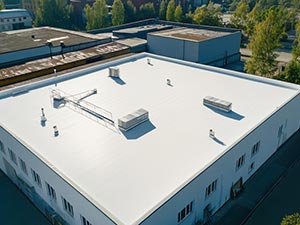
Commercial TPO roofing is a single-ply membrane that many Fort Worth building owners consider when energy use and environmental goals matter. Its reflective white surface reduces heat absorbed from the sun, but whether TPO is the right system for a given building depends on the roof underneath it, how it will be attached and how its details are handled.
Anderson Industrial Roofing, a family-owned company serving customers since 1993, installs single-ply systems including TPO for commercial and industrial buildings across the Dallas-Fort Worth service area. To discuss a Fort Worth property, call (866) 949-8016.
Energy Efficiency Benefits of Commercial TPO Roofing
Energy use is a leading sustainability goal for many organizations. White TPO membranes generally reflect more incoming sunlight than a dark roofing surface, which may lower roof-surface temperature under comparable conditions. That can affect cooling demand in Fort Worth summers, but insulation and the entire building assembly are important in determining actual energy performance.
The size of the benefit depends on the building. Roof area compared with wall area, insulation, ventilation and how the building is used all matter, and reflectivity usually declines as dirt builds up. Treat any savings figure as an estimate until it is checked against the building’s own energy use.
Sustainable Materials and Environmental Responsibility
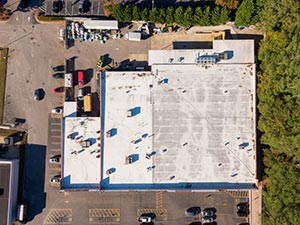
TPO membranes can weigh less than some multi-layer roofing systems, but the total assembly includes insulation, cover boards, attachment and other components. Structural loading must be reviewed for new construction or roof replacement. Recycling is not automatic: any take-back or recycling claim depends on the product, available facilities and the actual removal and handling arrangements. Environmental claims for any product should be checked against the manufacturer’s documentation.
Longer service from a properly specified, installed and maintained system could reduce material replacement frequency, but the outcome depends on actual performance, drainage, repairs and how the building is operated.
Long-Term Performance and Environmental Impact
Heat-welded seams are a defining feature of TPO, and their workmanship and inspection matter to water resistance. Routine inspection can identify punctures, loose details and damaged transitions while repairs remain localized. Whether a repair is economical depends on the defect, access and the surrounding roof condition. The commercial roof maintenance guide covers regular upkeep.
Supporting Green Building Goals
Owners pursuing sustainability certifications or energy targets sometimes consider reflective roofing. Whether a TPO roof contributes to a specific rating or incentive depends on the program, the product and the whole building, so confirm requirements with the program administrator and the manufacturer before counting on one.
TPO Suitability Matrix for a Commercial Roof
Before choosing TPO, review the roof against the factors below. They are also the questions to ask any contractor preparing a proposal.
| Factor | What to check on a Fort Worth building | Why it affects a TPO decision |
|---|---|---|
| Substrate condition | Deck type, wet or deteriorated insulation, condition of any existing membrane | A TPO assembly requires a suitable substrate and compatible materials. Confirmed wet insulation and damaged decks require appropriate correction before installing a new assembly. |
| Drainage | Slope, ponding areas, drain and scupper locations and capacity | Persistent ponding calls for a drainage assessment; membrane selection cannot by itself correct a slope, outlet or scupper defect. |
| Attachment | Fully adhered or mechanically attached as permitted by the selected assembly, deck and wind design | Attachment choice affects tested wind-uplift performance, deck suitability, the installation scope and future repairs. |
| Insulation | Existing thickness and condition, and what applicable code requires at replacement | Insulation and overall assembly characteristics are essential to thermal performance; membrane reflectivity affects surface heating but is not a substitute for insulation. |
| Rooftop activity | HVAC service routes, equipment moves, grease, oils or chemical exposure | Heavy traffic and certain substances can damage a membrane, so walkways and protection may be needed. |
| Detailing | Penetrations, curbs, parapets, edges and transitions | Details are important potential leak points and require compatible flashing, secure edges and careful installation. |
| Service access | Roof access, hoisting, occupied space below, work hours | Access and occupancy shape scheduling, safety planning and cleanup. |
Seams, Repairs and Compatibility
TPO sheets are joined at seams and flashed at details, and its seam and repair rules differ from other single-ply systems. Anderson’s single-ply membrane page describes the TPO, PVC and EPDM options. For your roof, put the specifics in the written scope.
| Topic | What to confirm in writing |
|---|---|
| Seams | TPO field seams are normally joined with hot-air welding. Ask how weld quality is checked and who is responsible if a seam opens. |
| Repairs | Repairs may use compatible TPO membrane, patches and prefabricated flashing details. Ask what preparation, welding and verification the selected manufacturer specifies. |
| Contact with other materials | Not every sealant, coating or old membrane is compatible with TPO. Ask what will touch the membrane at curbs, penetrations and edges. |
| Recover over old roof | Ask how moisture, existing layers, deck attachment, code limits, structural loading and manufacturer approval are evaluated before any recover; specify the separation or cover board if required. |
Documenting a TPO System Choice
Before selecting a membrane, compare written proposals that use the same roof areas and underlying assembly assumptions. The specified TPO thickness, insulation and cover board, attachment method, flashing details, and expected access arrangements should be identifiable rather than left as general product descriptions. Ask which wet or deteriorated areas are included in the base scope, which conditions require a written change, and how the contractor will document completed seams and transitions. This makes the building-specific suitability decision distinct from a later repair or maintenance assignment.
What the Contractor Must Confirm Before Work Starts
- The investigation scope, including limits of inspection and how existing roof, insulation and deck conditions will be assessed
- The system specification: membrane thickness, insulation, cover board and attachment method
- The detail plan for penetrations, edges, drains and transitions
- How seams will be checked, and who is responsible for repairs afterward
- Exclusions, schedule, protection of the occupied building below and cleanup
- Whether any workmanship or manufacturer warranties are offered, their issuers, exclusions and written terms
Is TPO the Right Choice?
A properly selected TPO assembly can be a practical option for an owner comparing reflective low-slope membranes, but its suitability is specific to the building and written system design. A written scope based on your building is the best basis for comparing proposals. For more on the services involved, see the commercial roofing solutions page, or call (866) 949-8016 to discuss a Fort Worth building.
Frequently Asked Questions
Is commercial TPO roofing environmentally friendly?
It may support a building’s sustainability priorities through its reflective surface and an appropriately maintained service life, but environmental outcomes are project-specific. Recyclability depends on the manufacturer and available programs, so ask before assuming it.
How does TPO roofing affect energy use in a commercial building?
A reflective surface reduces heat absorbed by the roof and may lower cooling demand. The effect depends on insulation, roof area and how the building is used.
How are TPO seams and repairs handled?
Seams are normally heat welded, and repairs use compatible TPO patches and flashing. Ask for seam checks and the repair approach in the written scope.
Can TPO be installed over an existing roof?
Sometimes. A recover may be possible only where existing roof condition, moisture, layer count, structural loading and the proposed manufacturer system permit it. Any necessary investigation and repairs must be scoped first.