

 A flat commercial roof performs best when it receives consistent attention over time rather than emergency responses after visible problems develop. For property owners and facility managers in Dallas, roof inspection on a structured schedule is one of the most reliable tools for managing long-term maintenance costs and extending the service life of a commercial roofing system. Call Anderson Industrial Roofing at (866) 949-8016 for roof inspection in Dallas, TX.
Building a Roof Inspection Program for Dallas Commercial Properties
A structured inspection program starts with establishing the right cadence for the property and its roofing system. Most commercial flat roofs benefit from professional evaluations at least twice per year, with additional visits following major storm events. For Dallas properties, aligning inspections with the end of spring storm season and the end of summer gives contractors the opportunity to assess weather-related wear at its peak accumulation point, before conditions become favorable again and developing issues have time to worsen.
Newer roofing systems in good condition may require less frequent professional attention, while aging membranes, roofs with documented repair histories, or properties in heavy-use industrial settings benefit from more regular evaluations. A contractor experienced with the specific system in place can help property managers determine the right frequency and structure a service agreement that reflects the building’s actual condition and maintenance history.
What Happens During a Scheduled Roof Inspection
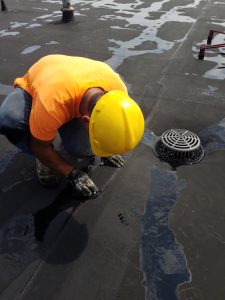
During a scheduled roof inspection, the contractor evaluates all major components of the roofing system rather than responding to a single reported symptom. The membrane surface is checked for blistering, punctures, and surface erosion, and seams are examined for separation or lifting along their full length. Flashing details at parapet walls, curbs, and penetrations are assessed for gaps or sealant failure that could allow water entry at connection points.
Drainage components receive close attention in Dallas, where heavy rain events can deliver significant water volume over a short period. Drains, scuppers, and overflow relief points are checked for debris accumulation and confirmed to be functioning as designed. Rooftop equipment bases, pipe boots, and conduit entry points are also inspected, since penetrations are among the most common locations for moisture intrusion across all flat membrane types.
Inspection Records Support Long-Term Roof Management
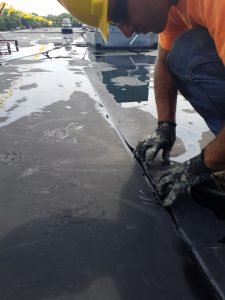 Each scheduled inspection produces documentation that builds in value over time. Written reports with photographs create a running record of the roof’s condition, noting which areas have been repaired, which are being monitored, and how the system is performing relative to its age and expected service life. This history is useful when planning capital expenditures, evaluating warranty requirements, and deciding whether targeted repairs or a broader replacement makes sense for a given section of the roof.
Inspection records also carry practical value when storm damage results in an insurance claim. A documented baseline showing the roof’s pre-storm condition helps distinguish normal wear from newly caused damage, which can be a point of disagreement in hail-prone markets like Dallas. Property managers who keep consistent inspection records are better positioned to support claims and demonstrate that the property has been actively maintained throughout the life of the roofing system.
Roof Inspection in Dallas, TX
A maintenance-oriented approach to commercial roof care keeps repair costs predictable, limits the frequency of emergency work, and extends system performance over the full expected service life. Regular inspection visits give property managers the information they need to plan ahead rather than react to problems as they surface. For roof inspection in Dallas, TX contact Anderson Industrial Roofing at (866) 949-8016 today.
FAQ
What does a commercial roof inspection and maintenance program typically include?
A structured program generally includes scheduled professional inspections, written condition reports with photographs, identification of areas needing repair, and guidance on maintenance intervals. Some contractors offer service agreements that combine inspection visits with routine maintenance tasks such as drain clearing and sealant refreshing, keeping the roof in maintained condition between major repair projects.
How does the Dallas climate affect how often a commercial roof should be inspected?
The combination of an active spring hail and storm season followed by an intense summer heat period means Dallas commercial roofs experience two distinct cycles of stress each year. Inspecting after spring storm season and again at the end of summer lets contractors catch weather-driven damage while it is still localized, reducing the risk that developing issues carry over into the next season unaddressed.
What documentation should I keep from commercial roof inspections?
Written reports, photographs, and repair records from each inspection visit should be retained for the life of the roofing system. This documentation supports warranty claims, informs long-term maintenance planning, and provides a condition baseline that is directly relevant if a storm event results in an insurance claim. Organized records also make it easier to hand off roof management responsibilities when property ownership or facility management changes.