

Commercial roof coating in Frisco, TX is a restoration option for an existing roof that is still structurally sound. Anderson Industrial Roofing, a family-owned commercial roofing contractor since 1993, applies roof coating to suitable roofs for Frisco businesses. The deciding question is not which coating to choose first. It is whether the existing roof can accept a suitable coating system after the necessary preparation and repairs.
A compatible coating can protect an existing roof assembly that has been inspected, with sound decking, dry insulation, serviceable drainage and a surface that accepts the proposed product. Whether the finished surface is reflective depends on the selected coating. It cannot fix ponding water caused by drainage defects, rotted decking or saturated insulation. For a condition check on your building, call Anderson Industrial Roofing at (866) 949-8016.
Why Roof Coating Makes Sense in North Texas
Frisco roofs take long summers of direct sun, high surface temperatures, heavy rain and the occasional hail event. Sunlight and heat cycling break down membranes over time, and each day of expansion and contraction stresses seams and flashings. A coating adds a protective layer on top of the roof that takes much of that exposure instead of the membrane.
Some coatings have high solar reflectance, which can lower roof-surface temperatures compared with darker coverings. Reflectivity and energy results vary with the product, color, roof type, how clean the surface stays and how the building is used, so treat any savings figure as an estimate for that building and not a promise. Ask for the manufacturer’s data sheet for the specific product being proposed.
Roof Coating and Extended Membrane Life
The coating works as a sacrificial layer. It can reduce direct ultraviolet and weather exposure to a suitable existing roof covering after identified seam, flashing and puncture defects have been properly repaired. That can delay replacement on a roof that has useful life left.
How much life a coating adds is not a fixed number. It depends on the condition of the existing roof at the time of application, the product and thickness applied, the quality of preparation, and follow-up maintenance. A roof with widespread hidden failure cannot be corrected by applying a new surface layer, which is why the assessment must come before selecting coating chemistry or thickness.
Is the Roof a Restoration Candidate? Coating, Repair or Replacement
The table below compares what a candidate roof looks like against one that needs repair first or is better replaced. Findings from a moisture survey, core samples or adhesion test, and a drainage review all feed into the decision.
| Factor | Good coating candidate | Repair first, then coat | Replacement is more likely |
|---|---|---|---|
| Moisture | Dry, sound roof assembly; suspected concealed wet areas investigated and resolved before application. | Isolated wet areas that can be cut out and replaced before coating. | Widespread saturated insulation or repeated water intrusion that makes limited repairs impractical. |
| Adhesion and surface | Membrane is clean, bonded and accepts the coating in a test area. | Blisters, open seams or loose flashings that can be re-secured and sealed first. | Membrane that is brittle, delaminating or will not hold a coating. |
| Substrate and decking | Decking and insulation are sound and fastened. | Small areas of damaged insulation or deck that can be patched. | Rotted or corroded decking, or widespread deteriorated insulation. |
| Drainage | Drainage is functioning, and standing-water exposure is within the selected product requirements. | Clogged drains, scuppers or flashings that can be cleared or corrected. | Persistent ponding caused by structural or slope deficiencies that require a broader drainage/roof-assembly design. |
| Compatibility | Coating is approved for the existing membrane or metal and the roof can be primed as the manufacturer requires. | Incompatible patches or old coatings that can be removed or isolated. | Layers of unknown or incompatible material that cannot be reliably prepared. |
If a roof lands mostly in the middle column, targeted commercial roof repair before coating can make restoration practical. When widespread defects make local restoration impractical, compare the affected-area work with commercial roof replacement. The table is a screening guide, not an automatic instruction to replace the full roof.
Which Roof Types Are Usually Considered
Flat and low-slope commercial roofs are the common candidates, including metal and single-ply systems. Compatibility matters on every one of them. Single-ply membranes such as TPO, PVC and EPDM each behave differently, and some do not accept every coating, so the existing membrane (see TPO, PVC and EPDM membranes) should be identified before a product is selected. Silicone coatings are one option for low-slope roofs, and the right choice depends on what the roof is made of and how it drains.
What a Coating Project Involves
Evaluation and Preparation
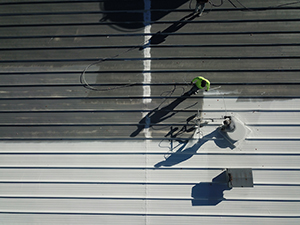
Preparation determines whether a coating lasts. It typically includes a roof evaluation, cleaning, repairs to seams, flashings, penetrations and damaged membrane, and primer or a bonding coat where the manufacturer calls for it. Wet insulation and failed areas are cut out and repaired before anything is applied over them. Incomplete preparation or moisture left in the assembly can contribute to poor adhesion, blistering or premature coating failure.
Application and Acceptance
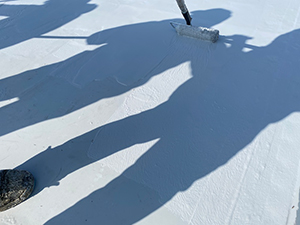
Coatings are applied in the thickness and number of coats the manufacturer specifies, in suitable weather. The written scope should identify the application product, specified wet- or dry-film thickness or coverage method, prepared detail work, any specified tests, and how visible defects or thin areas will be corrected before acceptance. Ask for the product data and any written warranty terms before work begins.
What to Include in a Written Coating Proposal
Before comparing prices, confirm the limits of the work. A proposal should identify the roof sections being treated, their present covering, known repairs, areas excluded from coating and the specific silicone product and primer, if applicable. It should explain whether the estimate covers localized membrane repairs, corroded fasteners, flashing reinforcement, drain cleaning and removal of unsuitable old coating. Those tasks should not be assumed included simply because the estimate says “roof restoration.”
Where insulation or decking cannot be assessed without opening the roof, the estimate should distinguish observed conditions from potential concealed work and explain how a change will be documented and approved. Building access, equipment protection, staging, cleaning and wash-water handling also affect occupied properties. A specified acceptance check should match the product’s installation conditions and contract; a visual inspection alone cannot establish that all concealed conditions are dry.
Follow-Up Inspection
A coated roof still needs attention. Inspection intervals depend on the coating, exposure, building operations and any actual manufacturer requirements. Reviews after major storms or rooftop equipment work can identify blocked outlets, punctures and early coating wear. An inspection can inform future repair or recoat choices. Any written report, photographs or test results should be listed in the inspection scope rather than presumed included.
Renewable Warranty Opportunities Through Recoating
As a coating reaches the end of its service cycle, a new application can restore protection, and some manufacturers offer coverage tied to approved recoating. Whether a warranty can be renewed depends on the manufacturer, the product, the roof’s condition at that time and whether the work follows their requirements. Warranty terms should be confirmed in writing for the specific product and roof before anyone budgets around them.
Avoiding Large Capital Expenditures
Replacing a commercial roof is a major capital expense. For a qualifying roof, coating restores protection without tearing off the existing system, and that can defer replacement while spreading cost into planned maintenance. Because the roof stays in place, the work is generally less disruptive than a tear-off, although rooftop work, odors and access still need to be coordinated with the building’s occupants.
The cost case depends on the existing roof condition and the scope of preparation and repairs. Coating saturated insulation or failing decking can add cost without correcting the source of damage. The evaluation protects the owner from that outcome.
The Value of Roof Coating for Frisco Businesses
Frisco property owners are balancing building performance, maintenance budgets and long-term asset management. For a sound roof, a compatible coating may reduce direct weather exposure to the existing surface and defer replacement; reflectivity and building energy effects are product- and property-specific. For a roof that is not sound, the same evaluation shows it early and points to repair or replacement instead.
For roof coating in Frisco, TX, call Anderson Industrial Roofing at (866) 949-8016.
Frequently Asked Questions
What are the main benefits of a commercial roof coating in Frisco, TX?
A coating can reduce heat absorption, shield the membrane from UV and weathering, and help postpone replacement when the roof is a sound candidate. Energy and lifespan results vary by roof and product.
What roof conditions make coating inappropriate?
Uncorrected drainage defects, rotted decking, saturated insulation and membranes that cannot accept the selected system are common reasons not to coat. These problems need repair or replacement first, because a coating does not correct them.
Can a coating be reapplied to renew warranty coverage?
Sometimes. Recoating can restore protection, but warranty eligibility depends on the manufacturer’s terms, the product and the roof’s condition, so confirm it in writing before relying on it.
What types of commercial roofs are good candidates for coating?
Flat and low-slope roofs, including many metal and single-ply systems, can qualify if they are structurally sound, dry and compatible with the coating. An evaluation confirms it.