

Flat roof repair addresses identified defects that may allow water into an occupied commercial building. In Frisco, commercial roofs face heavy rain, hail, wind and long periods of intense heat, and the practical question after a leak or storm is whether the problem is a localized defect that can be repaired or damage that needs a broader assessment.
Anderson Industrial Roofing provides commercial flat roof repair across the Dallas-Fort Worth service area, and it has been family owned since 1993. To discuss a Frisco property, call (866) 949-8016. For related guidance on choosing a company, see commercial roofing companies in Frisco.
Common Flat Roof Problems Found in Frisco
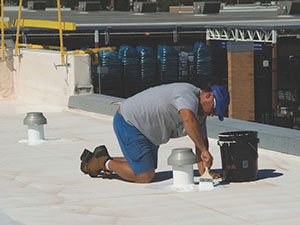
Low-slope roofs rely on properly located drainage points, scuppers and drains. When drainage is blocked or the roof has settled, water may remain on the surface. The effect depends on the roofing system, duration of ponding and condition of nearby seams, flashings and insulation.
Thermal movement is another. North Texas summers heat the roof during the day and cool it at night, and the repeated expansion and contraction stresses seams and transitions. Over time these can open and let moisture in.
Symptom to Inspection Evidence
A repair is only as good as the diagnosis behind it. The table shows what an inspection should check for common symptoms and the limits of each finding.
| What you see | What the inspection should look for | What it can and cannot tell you |
|---|---|---|
| Interior stain or drip | Roof area above the stain, nearby seams, penetrations, flashings and drains | A stain shows where water appeared inside, not always where it entered the roof. Water can travel along the deck or insulation first. |
| Ponding after rain | Slope, drain and scupper condition, low spots, debris | Shows where water collects. It does not by itself show whether the membrane or insulation below is wet. |
| Open or lifting seam | Length of the affected seam, condition of nearby seams, signs of movement | A single open seam may be a localized repair. Seams opening across the roof point to a broader issue. |
| Split or puncture | Size and location, whether foot traffic, debris or hail caused it, and the membrane around it | Confirms the visible damage. Whether water reached the insulation needs separate checking. |
| Damaged flashing or sealant at penetrations and edges | Curbs, pipes, parapets, edge metal, sealant condition | Flashings and details are among the most common leak locations on flat roofs. |
| Possible hail impact | Bruising, cracks, fractured surfaces, punctures, damaged accessories | Some hail damage is visible, and some may not be. A written finding should say what was and was not confirmed. |
Do not diagnose hidden damage from a stain alone. A good inspection ties each symptom to evidence found on the roof and says clearly what remains unconfirmed.
How Flat Roof Repair Addresses Drainage Problems
Repair of a drainage problem starts with the cause. The inspection covers drains, scuppers, gutters and the low areas where water collects. Clearing blockages may be enough in some cases. If the roof has settled and ponding keeps returning, the scope may need to address the drainage itself.
Where standing water has already damaged the surface, the affected membrane can be repaired or reinforced. A roof coating is another option on some roofs that are sound enough to be restored, and the contractor should explain whether it fits yours.
Repairing Seam Separation and Heat-Related Damage
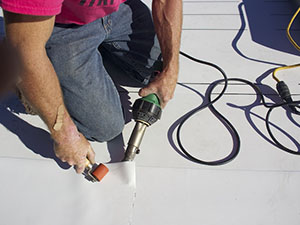
Seams join membrane sections and are among the roof details that deserve close examination. Separation often develops slowly, and water entering a small opening can travel before it shows inside the building.
Repair method depends on the membrane. The right approach for a welded thermoplastic seam differs from an adhesive-sealed or taped seam, so ask what method and materials will be used and whether they are compatible with your roof. The contractor should also check nearby seams for the same wear.
Hail Damage and Membrane Puncture Repair
Storms involving hail can affect roofs in the Frisco area. Some impacts are obvious, while other suspected damage requires closer inspection. Hail can bruise or crack membrane, damage surfaces and cause punctures that let water in during later rain.
Targeted repair locates and corrects the damaged areas, patches punctures or replaces damaged membrane sections, and confirms that flashing and drainage components still work after the storm. The report should distinguish documented damage from suspected impact effects, with testing limitations and the affected roof locations noted.
Localized Repair or Broader Assessment?
A localized repair may fit a confirmed defect when the surrounding roof remains suitable for the proposed method. If deterioration is repeated or concealed moisture is extensive, the investigation and repair scope may need to expand. The table is a guide for evaluating conditions, not a diagnosis from a distance.
| Situation | Usually fits a localized repair | Usually calls for a broader assessment |
|---|---|---|
| Seams | One or a few open seams in an otherwise sound area | Seams opening across several roof sections |
| Membrane damage | Isolated punctures or splits | Widespread cracking, shrinkage or surface deterioration |
| Moisture | Leak traced to one detail with dry surroundings | Wet insulation, repeated leaks in the same area or a large damp area |
| Drainage | Blocked drain cleared, minor correction | Persistent ponding from settlement or inadequate slope |
| Repair history | First repair at that location | Repeated repairs near the same spot |
Where findings warrant broader work, the next step is an assessment of moisture and condition, followed by options that may include more extensive repair, coating or commercial roof replacement. For related upkeep considerations, see the commercial roof maintenance guide.
What a Repair Quote Should Include
- The exact locations being repaired, shown on a roof plan or in dated photos
- The cause identified for each leak or defect, and what could not be confirmed
- The materials and repair method for each location, including compatibility with the existing roof
- Drainage work, if any, and what it will and will not correct
- Roof access, equipment, work hours and protection of the occupied building below
- Exclusions, follow-up visits and any warranty terms, in writing
- Allowances for concealed wet insulation or damaged decking, including how additional work will be approved
Plan roof access with the contractor in advance. Property staff should not go onto the roof to inspect or work on it; arrange access with the repair company.
Understanding the Value of Prompt Flat Roof Repair
Ponding, seam separation, hail damage and membrane deterioration tend to worsen when left alone, and a small leak can become interior damage and business disruption. Timely investigation may limit further damage, but the work and cost depend on roof condition and what is found. An agreed roof inspection can document visible defects, access limitations and any testing still required. To arrange one, call (866) 949-8016.
Frequently Asked Questions
What causes flat roof leaks on commercial buildings in Frisco?
Common causes include ponding water, open seams, damaged flashing, blocked drains and hail damage. A roof assessment helps identify which conditions apply and whether they are localized.
How does ponding water damage a flat roof, and what does repair involve?
Standing water adds stress to seams and membrane. The scope depends on the cause of ponding and any confirmed damage; surface patching alone does not correct slope or blocked drainage.
Can hail damage a flat roof without causing an immediate leak?
Yes. Hail can bruise or weaken membrane without an immediate leak, so an inspection after a major storm is worthwhile.
When does a leak need more than a spot repair?
Wider assessment is warranted when seams are opening across the roof, insulation is wet, or leaks keep returning in the same area.