

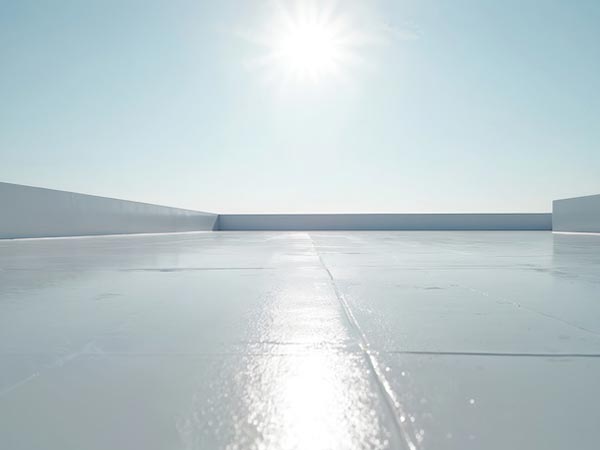
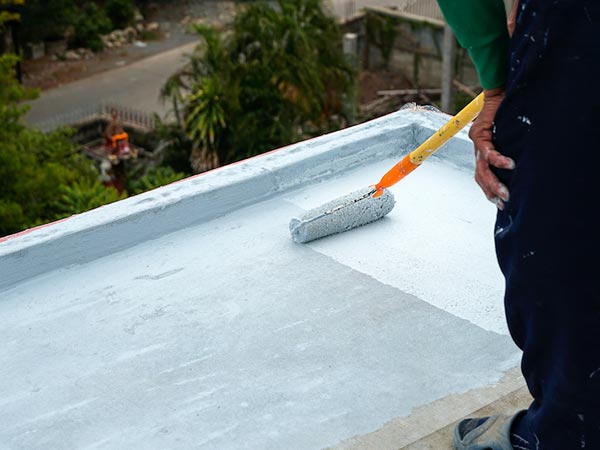
Grand Prairie sits in the middle of one of the busiest distribution corridors in North Texas, and the flat roofs on those warehouses, plants, and retail buildings absorb a climate that swings hard in every direction. A roof coating is a fluid-applied layer that cures into a seamless membrane over an existing roof, sealing the surface and reflecting heat before it reaches the building.
Call Anderson Industrial Roofing at (866) 949-8016 for roof coating in Grand Prairie, TX.
Every Season Tests Roof Coating Differently
A coating has to perform across a full calendar year. Each season in North Texas pushes on it in a different way, and the argument for coating a building changes depending on which pressure you are looking at. Summer works on the surface with heat and ultraviolet light. Spring brings hail and rain volume that find any weak point. Winter delivers a short run of freezing nights that turn small flaws into openings.
Heat is where most owners notice it first, and in this part of Texas the heat lasts longer than anything else on the list.
Summer Heat Is Where Roof Coating Earns the Most
Rooftop temperatures on a dark membrane can run far above air temperature on a July afternoon in Grand Prairie. That heat drives cooling loads inside the building and speeds up the breakdown of the membrane itself. Ultraviolet light works the same surface, drying the material out and leaving it brittle.
A reflective coating pushes a large share of that solar energy back before it is absorbed. The surface runs cooler, the membrane ages more slowly, and rooftop equipment operates in a less punishing environment. On a large distribution building with climate-sensitive space below, that difference shows up on the utility bill through the entire cooling season. Spring is a different problem, and it arrives a good deal faster.
Spring Storms Test the Coated Surface
Spring storms across the Dallas Fort Worth area arrive with hail and rain volume that a flat roof has to handle in a short window. Hail can damage a commercial membrane. It can bruise or compress the roofing materials without creating an obvious opening. Those damaged areas can become future failure points if they are not identified and addressed.
A coating applied before storm season fills surface imperfections, seals around penetrations, and lays a continuous layer over seams that would otherwise take the impact directly. A properly maintained and well-drained roof can shed heavy rain while the coating helps protect vulnerable surface areas. Coating does not stop hail, but it changes what the hail has to get through. Winter asks less of a roof here, though what it asks is easy to underestimate.
Winter Freeze-Thaw Reach Into Hairline Cracks
Grand Prairie winters are short, but they include freezing nights, and that is all a freeze-thaw cycle needs. Water works into hairline cracks and surface pinholes during the day. When temperatures drop overnight, that water expands as it freezes and widens the opening slightly. Repeat the cycle enough times across a season and small flaws become real breaches.
A properly applied coating creates a continuous protective layer across the roof surface and can help limit moisture intrusion at vulnerable areas. Owners overlook that benefit, since it prevents damage nobody would have seen until spring.
Grand Prairie Roof Coating Experts
The strongest case for roof coating in Grand Prairie is that one system can address several different weather-related concerns. Reflectivity in summer, surface continuity through spring storms, and crack resistance in winter all come from the same layer. A structurally sound roof may be a good candidate, and an inspection can determine whether the existing system is suitable for coating.
For roof coating in Grand Prairie, TX, contact Anderson Industrial Roofing at (866) 949-8016 today.
FAQ
What is the best time of year to apply a roof coating in Texas?
Spring and fall usually offer the best conditions, since most systems need moderate temperatures and dry weather to cure. Summer work is possible with scheduling adjusted around dew and afternoon heat.
How long does a commercial roof coating last?
Service life varies by coating type, application thickness, roof condition, and maintenance. Some systems can be recoated when the existing coating reaches the end of its service life.
Can a roof coating be applied over an existing coating?
Often yes, as long as the older layer is still bonded and compatible. A contractor tests adhesion before recommending it.