

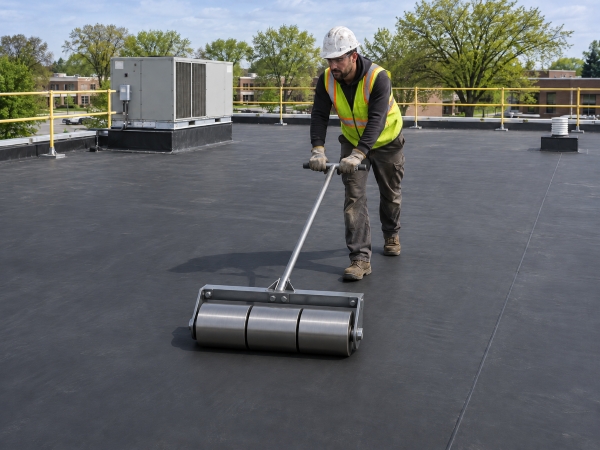
EPDM is a synthetic rubber membrane used on many commercial flat roofs. When a leak is reported, the investigation commonly focuses on seams, flashings, penetrations, membrane damage and drainage conditions. For Garland commercial buildings, EPDM roof repair means identifying the likely entry point, matching the repair to the installed membrane and deciding whether surrounding roof conditions still support localized work.
Anderson Industrial Roofing, family owned since 1993, works on single-ply systems including EPDM, TPO and PVC membranes and provides commercial roof repair across the Dallas-Fort Worth service area. To discuss an EPDM roof in Garland, call (866) 949-8016.
Where EPDM Roofs Usually Leak
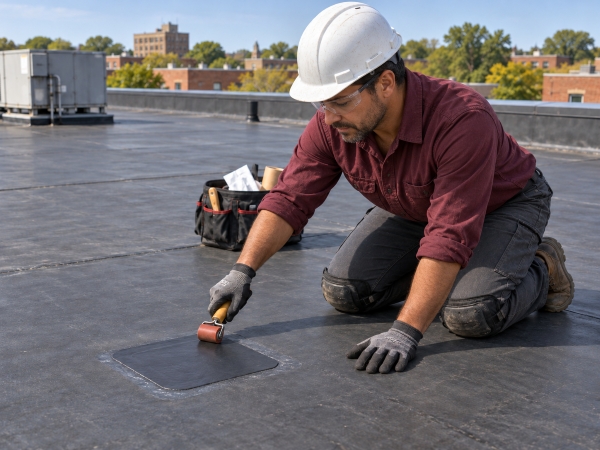
EPDM systems use large membrane sheets, and their seams and detail transitions remain important repair points. Anderson’s membrane page notes that EPDM seams use liquid adhesive or specialty tape rather than heat welding. Seam repairs therefore depend on compatible tape, primer, adhesive and surface preparation. Other common locations include:
- Flashings and terminations at walls, curbs, pipes and equipment, where the membrane meets other surfaces.
- Penetrations such as vents, drains and conduit.
- Punctures and tears from service traffic, tools, debris, impact or other damage.
- Corners and edges, where movement, attachment or aging can create tension or separation.
- Low areas where recurring ponding indicates a drainage condition that should be evaluated separately.
How an EPDM Repair Is Matched to the Damage
A repair follows the diagnosis. The table summarizes common conditions, the usual approach and the point where a localized repair stops being enough. It describes general practice, not a guarantee for any particular roof.
| Condition | Typical EPDM repair approach | When more than a patch is needed |
|---|---|---|
| Open seam | Prepare the area and repair the seam with compatible primer, tape, adhesive or other materials required by the installed system | Seam problems across several areas, or surface condition that no longer supports a reliable compatible repair |
| Puncture or tear | Prepare the area and install a compatible EPDM membrane patch using the required primer, tape or adhesive | Multiple damaged areas, or confirmed moisture beneath the puncture that expands the repair scope |
| Pulled or failed flashing | Repair or replace the affected flashing and termination materials with compatible components | Repeated failure at the same curb, wall or penetration, or broader movement that keeps damaging the detail |
| Edge or corner movement | Evaluate attachment and membrane condition, then re-secure or re-detail the affected area as required | Loose attachment, recurring edge movement or broader membrane distress across a larger area |
| Ponding with surface wear | Evaluate the drainage cause separately and repair suitable membrane areas as required | Recurring ponding tied to slope, substrate, drain placement or other conditions outside a localized membrane repair |
| Ballasted roof leak | Temporarily move ballast as required to access the membrane, complete the compatible repair and restore the ballast according to the roof assembly | Confirmed wet insulation or substrate damage, or ballast and attachment conditions that require broader corrective work |
Surface Preparation and Compatibility
EPDM repairs depend on a prepared surface and compatible materials that meet the selected repair method’s requirements. Weathered membrane, dirt, moisture or residue can interfere with tape or adhesive performance, so preparation requirements should match the membrane condition and repair system. Ask the contractor which patch, primer, tape or adhesive will be used, how the area will be cleaned and how the finished repair will be checked.
Compatibility also applies to what touches the membrane. Sealants, coatings and asphalt-based materials should not be assumed compatible with EPDM, so a written scope should identify the materials used at seams, details and edges.
Finding the Cause Before Repairing
An interior stain shows where water appeared, not always where it entered. Water can travel along the deck or insulation before it becomes visible. A useful investigation reviews seams, flashings, penetrations, drains, low areas and surrounding membrane conditions, with findings documented by location. Suspected concealed moisture may require additional evaluation, and the report should distinguish observed conditions from items that remain unconfirmed.
Arrange roof access through the contractor. Building staff should not go onto the roof to inspect or work on it themselves.
Repair, Coating or Replacement?
A localized repair may fit when damage is contained and the surrounding membrane, substrate, attachment and moisture conditions remain serviceable. When deterioration is widespread, repairs recur in multiple areas, or moisture involvement is broad, the scope should widen beyond a single patch. Options may include a roof coating where the roof is suitable, replacement of a section or full commercial roof replacement. Each option should be described in writing so affected areas, preparation, exclusions and closeout requirements can be compared.
Planned maintenance can help document developing defects and changing roof conditions. The commercial roof maintenance guide covers regular upkeep, and a commercial roofing estimate request is the way to start a conversation about a specific building.
What an EPDM Repair Quote Should Include
- Each repair location, identified on a roof plan, sketch or dated photographs
- The cause found at each location, and anything that remains unconfirmed
- The repair method and materials, and their compatibility with the existing EPDM
- How seams, patches and flashings will be inspected or checked after the work
- Handling and restoration of ballast, if the roof is ballasted
- Access, work hours, protection of the occupied building and cleanup
- Exclusions and any applicable warranty conditions or repair restrictions, in writing
Frequently Asked Questions
Can a leaking EPDM seam be repaired?
Often, when the surrounding membrane remains serviceable. The seam is prepared and repaired with compatible EPDM tape, primer, adhesive or other materials required by the installed system.
How is a puncture in an EPDM roof repaired?
A compatible EPDM membrane patch can be bonded over suitable damage after preparation. Confirmed wet insulation or substrate damage requires additional corrective work.
Can aged EPDM still be repaired?
Sometimes. Weathered EPDM can require additional cleaning, priming or preparation, and the contractor should explain how repair compatibility and adhesion will be checked.
When is repair no longer enough?
When defects recur across multiple areas, membrane condition is broadly unsuitable for repair, or moisture involvement is extensive, compare restoration, section replacement and full replacement scopes.