

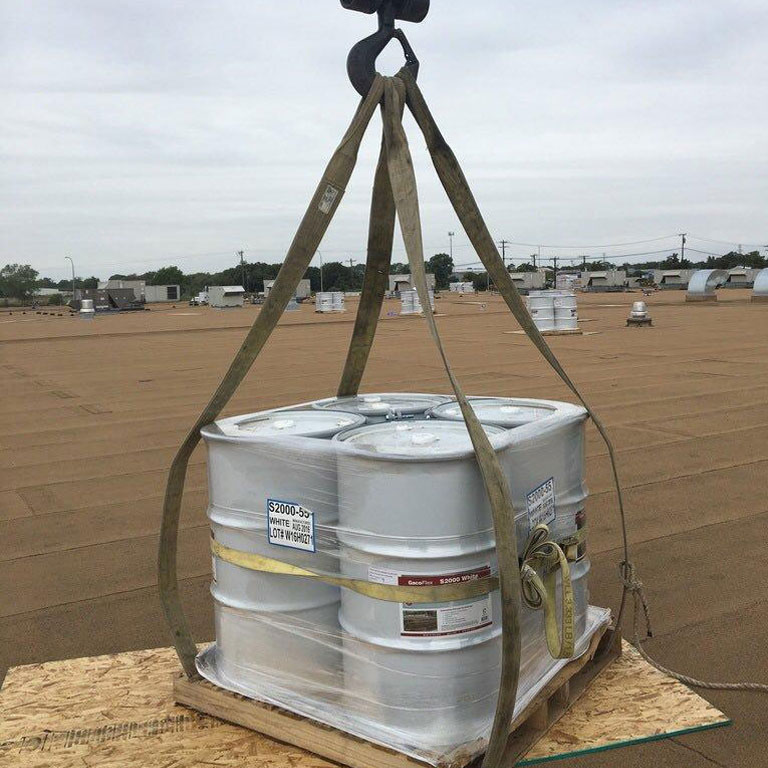
Is your flat or low-slope commercial roof a good candidate for a coating? In Grapevine, Texas, a roof coating can restore a roof that is still sound, but only when moisture, adhesion, drainage and the condition of the deck check out. A coating is applied over the existing roof, so it works only as well as the roof underneath it.
Anderson Industrial Roofing is a family-owned commercial roofing company serving commercial building owners since 1993. Silicone roof coatings and restoration are among its commercial services, and its roof coating systems page covers the service. To discuss a Grapevine building, call (866) 949-8016.
Roof Coating Advantages
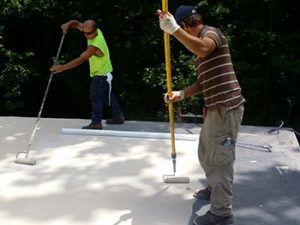
When a roof qualifies, coating can offer real advantages over a full replacement:
- A seamless, water-resistant surface: once cured, a coating provides a continuous weathering surface over properly prepared roof areas after compatible repairs have been completed.
- Less disruption: a coating avoids the tear-off that comes with replacement, so there is usually less debris and less interruption to tenants.
- Reflective surfaces: reflective coatings absorb less solar heat than dark roofs. How much that affects cooling cost depends on the building, its insulation and its equipment, so treat energy savings as building-specific rather than guaranteed.
- Flexibility: coatings are designed to move with the roof as temperatures change.
- A maintainable surface: a coated roof may be eligible for maintenance and future recoating when substrate and system conditions allow.
A suitable coating may extend the useful service of an otherwise sound roof, but the extension depends on the roof’s starting condition, the coating system, preparation quality and ongoing care. Any applicable workmanship or manufacturer warranty must be confirmed from the actual written proposal; no particular coverage is assumed.
Is Your Roof a Restoration Candidate?
This decision table shows the conditions that decide whether restoration, repair or replacement fits your roof.
| Condition | Good restoration candidate | Why it matters | If the roof does not qualify |
|---|---|---|---|
| Moisture | Insulation and supporting roof components assessed as suitable, with no unresolved wet areas | Wet insulation must be evaluated and addressed; coating does not dry underlying material | Repair or replace the wet sections, then re-evaluate |
| Adhesion and substrate | Existing surface is sound and preparation and adhesion checks support the selected system | Loose, delaminating or deteriorated surfaces will not hold a coating | Cleaning, repair and a bond test before any coating decision |
| Drainage and ponding | Drainage performance is acceptable for the specified coating system | Coating does not correct ponding caused by slope or drain defects; product ponding-water limits vary | Correct drainage where necessary and consider assembly changes if appropriate |
| Deck and structure | Supporting roof assembly is sound and sufficiently attached | Coating does not repair rotten, corroded or damaged decking | Repair or replace the deck before coating |
| Seams, flashings and penetrations | Defects are limited and repairable | Failed flashings and open seams must be repaired before coating | Detail repairs, then coat as part of the system |
| Compatibility | Coating is compatible with the existing roof type and any earlier coating | An incompatible coating can blister, peel or fail early | Confirm compatibility with the coating manufacturer’s requirements |
In short, coating does not fix ponding-water drainage defects, rotten decking or saturated insulation. Those problems need to be corrected first, or the roof may be better served by commercial roof replacement.
Roof surface appearance alone cannot verify concealed insulation or decking. Where moisture is suspected, the investigation should identify the method used and any areas that could not be evaluated. An infrared anomaly, if such screening is used, is not by itself proof of wet insulation.
How a Coating Project Proceeds
- Assessment: an on-site evaluation of the roof surface, drainage and signs of moisture.
- Repairs: open seams, failed flashings, damaged areas and wet sections are repaired or replaced.
- Cleaning and preparation: the surface is cleaned so the coating can bond, and primer and reinforcement are installed where the specified system requires them.
- Application: the coating is applied at the specified thickness and coverage, within the weather limits the product allows.
- Acceptance: the finished work is checked against the written scope, including coverage at seams and penetrations.
- Follow-up inspection: the roof is inspected on a schedule, and after major storms, so small problems are caught early. Anderson’s commercial roof maintenance guide covers routine care.
Premium Roofing Solutions and Roof Types
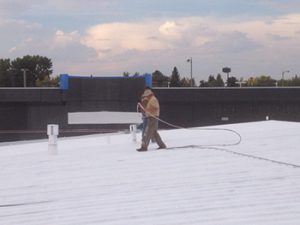
Coatings can be applied over several existing roof types, but each type has its own preparation and compatibility requirements. Single-ply membranes such as TPO, PVC and EPDM, and metal roofs, are among the roofs commonly evaluated for restoration. Anderson’s single-ply membrane page explains those membrane systems. Whichever roof you have, confirm that the contractor and the coating manufacturer both approve the coating for that specific substrate. Anderson also offers commercial maintenance and repair services; any future maintenance frequency should follow the roof condition and written system requirements.
On-Site Estimates and Roof Coating Estimates
Every roof is different, so a coating recommendation should come from an on-site evaluation. A useful estimate describes the condition found, the repairs needed first, the coating system and thickness, the preparation steps and what is excluded. To start, use the on-site roof assessment and estimate process or the contact page, or call (866) 949-8016. Learn more about the company on the Anderson Industrial Roofing about page.
Frequently Asked Questions
Can any commercial flat roof be coated?
No. A roof must be dry, structurally sound, well bonded and compatible with the coating. Wet insulation, damaged decking and drainage defects must be corrected first.
Does a roof coating fix ponding water?
No. Coating does not change the slope or drainage of a roof. Ponding should be addressed through drainage correction or by considering replacement.
How long does a roof coating last?
It depends on the roof’s condition, the coating system, the preparation and maintenance. Ask for the manufacturer’s warranty terms and the expected service conditions in writing rather than relying on a general number.
What happens after the coating is applied?
The roof should be inspected at intervals appropriate to the roof condition and system requirements, and after significant storms, with any damage repaired promptly. Routine care helps the coating reach its expected life.