

For commercial property owners in Garland, TPO roof installation involves an important choice: how to attach the membrane to the building. The attachment method affects wind resistance, thermal performance, and cost. Understanding these differences helps property owners evaluate the proposed roofing system before approving a project.
Call Anderson Industrial Roofing at (866) 949-8016 for TPO roof installation in Garland, TX.
Comparing TPO Roof Installation Attachment Methods
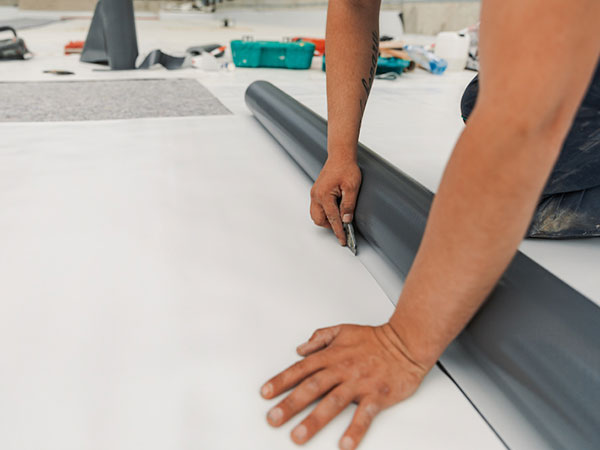
TPO roof installation options include fully adhered, mechanically attached, and ballasted systems. Fully adhered systems bond the membrane to a suitable insulation surface or substrate with adhesive. Conventional mechanically attached systems secure the membrane to the deck with plates and fasteners, typically within overlapping seams. Ballasted systems use stone or pavers to hold the membrane in place and require a structure capable of supporting the added weight.
Each approach has different installation requirements and costs. Single-ply roofers should explain how the proposed assembly meets the building’s needs, including wind resistance and thermal performance in Garland’s climate.
Comparing Wind Resistance and Thermal Performance
Spring storms in the Dallas-Fort Worth area make wind resistance an important consideration. Fully adhered membranes distribute attachment across the surface, while mechanically attached systems rely on specified fastening patterns. Wind performance depends on the complete roof assembly and its tested rating, so the attachment method alone does not establish which system is best for a particular building.
Metal fasteners can conduct heat through insulation, creating thermal bridges that reduce its effective thermal resistance. A fully adhered membrane does not necessarily eliminate this effect because the insulation beneath it may still be mechanically fastened. Evaluating how both the membrane and insulation are attached gives property owners a clearer picture of thermal performance.
What to Know Before Specifying a TPO Installation
The attachment method should reflect the building’s conditions, including deck type, substrate condition, and structural capacity. A pre-installation assessment helps determine which assemblies are suitable and identifies issues that need attention before the project begins.
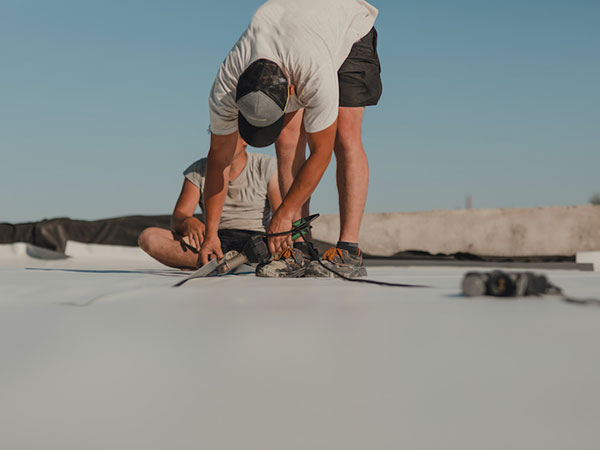
Seam quality is another important consideration. Regardless of attachment method, poorly joined seams can allow moisture into the roof assembly. Ask how the roofer checks seam quality during installation and addresses defects before completing the project. These checks help support long-term performance.
TPO Roof Installation in Garland
A well-specified TPO roof installation in Garland, with the attachment method matched to the building’s conditions and seam quality confirmed during the project, supports the long-term performance of a commercial flat roof. For TPO roof installation in Garland, TX, contact Anderson Industrial Roofing at (866) 949-8016 today.
FAQ
What attachment methods are used for TPO roof installation?
Options include fully adhered, mechanically attached, and ballasted systems. These use adhesive, mechanical fasteners, or ballast to secure the membrane. The appropriate choice depends on the deck, structural capacity, and requirements of the complete roof assembly.
How does attachment affect roof performance in Garland?
Attachment helps determine how the roof resists wind and can affect thermal performance. Fasteners through insulation may create thermal bridges, even beneath an adhered membrane. Compare the complete assemblies to understand how each option addresses the building’s needs.
Why does seam quality matter in a TPO roof installation?
Poorly welded seams may separate and allow moisture entry. Welding conditions and installation checks are important to seam quality, regardless of how the membrane is attached. Verifying the seams during installation helps identify defects that need correction.