


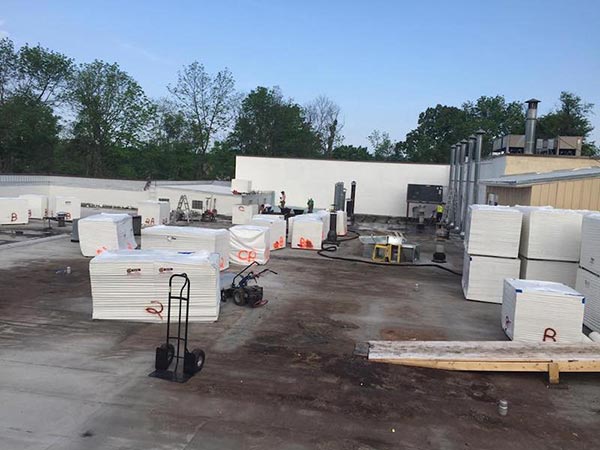
McKinney’s commercial buildings run their cooling systems hard from late spring into fall, and the roof overhead influences that cooling demand more than most owners expect. A TPO roof installation handled with energy efficiency in mind can help control operating costs for many years, while poor installation practices can reduce those benefits over time.
Anderson Industrial Roofing treats every flat roof as an energy decision first. Call Anderson Industrial Roofing at (866) 949-8016 for TPO roof installation in McKinney, TX.
TPO Roof Installation Affects Your Energy Costs
The membrane you can see is only part of what determines a roof’s energy performance. Many of the most important performance factors are determined during installation and influence the roof’s performance for decades. Solar reflectance, the insulation layer, seam quality, and drainage each pull on the cooling load in their own way.
The Solar Reflectance Index (SRI) is a measurement that combines a surface’s ability to reflect sunlight and release absorbed heat. White TPO typically has a higher SRI than darker roofing materials, which can help reduce heat absorption under intense Texas sunlight.
White Membrane TPO Roof Installation
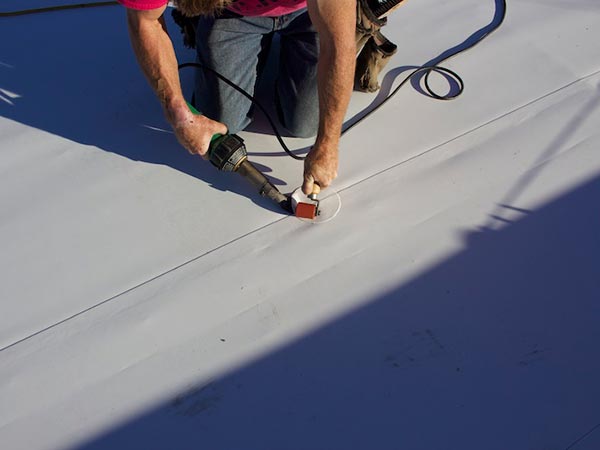
A new white TPO roof typically begins with strong solar reflectance, but that performance can gradually change as dirt, pollen, and rooftop buildup accumulate on the membrane. The rate of decline depends on environmental conditions and ongoing maintenance. In North Texas, where the cooling season is long, that potential change is worth considering when planning long-term roof performance.
Installation choices slow the decline. Drainage that clears water fast keeps film from taking hold, and clean, tight detailing gives grime fewer places to gather. A roof kept dry holds more of its original reflectance year after year.
TPO Roof Insulation and Attachment Set the Real R-Value
Below the membrane, the insulation is what actually slows heat transfer through the roofing assembly. Its rated R-value is best achieved when insulation boards are installed with full coverage and staggered joints to reduce gaps and thermal loss.
How the insulation is installed and attached also plays an important role. Mechanical fasteners can create small thermal bridges that allow more heat transfer through the insulation layer. Staggering board joints, adding a cover board, or fully adhering insulation can reduce those point losses and help the assembly perform closer to its rated R-value.
Seams and Drainage Finish the TPO Roof Installation Picture
TPO seams are heat-welded, meaning the sheets are fused with hot air into one continuous surface. Welds applied at the correct temperature and width help maintain the roof’s watertight barrier, while properly installed seams are better able to withstand movement over time.
Slope and drain placement decide how long water sits after a storm. Standing water can increase heat exposure, accelerate membrane wear, and contribute to long-term roofing problems when drainage issues are not addressed. A TPO roof installation designed with proper slope and tapered insulation supports drainage while protecting the membrane and overall roof performance.
Getting Lasting Value from a TPO Roof Installation
The energy benefits of a white membrane depend heavily on installation quality, and many of those details are difficult to correct after the roof is completed. Long-term reflectance, effective insulation performance, reliable seams, and proper drainage all depend on quality installation.
For TPO roof installation in McKinney, TX, contact Anderson Industrial Roofing at (866) 949-8016 today.
FAQ
Can TPO be installed over an existing commercial roof?
Sometimes. If the current roof is dry and code allows a second layer, an overlay can work, but wet insulation has to come off first or it drags down the new roof’s R-value.
Does the time of year affect a TPO roof installation?
It can. Heat-welded seams fuse best in mild, dry weather, so crews adjust welder heat and speed in cold or humid conditions to keep every seam sound.
How much can a reflective roof lower cooling costs?
Savings vary based on building size, insulation levels, HVAC efficiency, and operating conditions. A reflective TPO membrane can reduce heat gain through the roof assembly, which may help lower cooling demand during hot weather.