

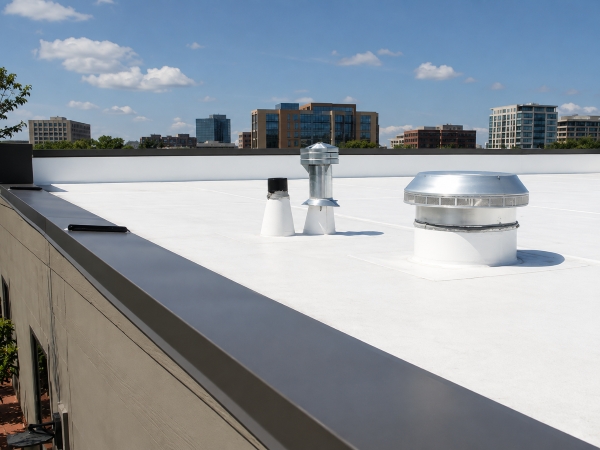
TPO (thermoplastic polyolefin) is a single-ply membrane used on many flat and low-slope commercial roofs. For a Keller building, suitability depends on the existing roof assembly, deck and insulation, drainage, rooftop use, attachment design, and how seams and flashing details will be installed.
Anderson Industrial Roofing, family owned and operated since 1993 with more than 30 years of experience, installs single-ply systems including TPO, PVC and EPDM for commercial properties. This page explains the main TPO installation choices and the conditions a Keller owner should confirm before comparing proposals. To discuss a project, call 866-949-8016.
What TPO Roofing Is and Where It Fits
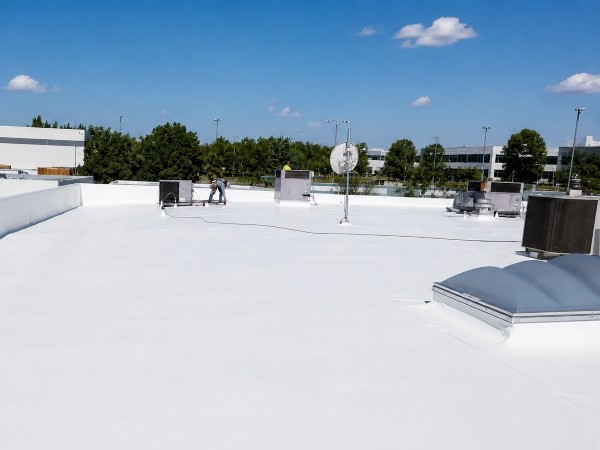
TPO is a thermoplastic sheet membrane commonly available in light, reflective colors. A reflective roof surface can reduce solar heat absorbed at the membrane compared with a darker surface, while any effect on building energy use depends on insulation, HVAC, building use, roof assembly, and other conditions. Anderson’s single-ply membrane page describes TPO alongside PVC and EPDM.
TPO can be used in reroofing and new-construction low-slope assemblies when the complete system is appropriate for the building. It is not automatically the best choice because it is light in color or uses heat-welded seams, so the existing roof, deck, insulation, drainage, rooftop equipment, exposure, and project goals all matter.
How TPO Is Attached
The attachment method affects the roof assembly, fastening or adhesive requirements, wind-design approach, and future access for repair. Common methods are:
| Attachment method | How it works | What to confirm in the quote |
|---|---|---|
| Mechanically attached | Sheets are secured with fasteners and plates according to the selected mechanically attached system | Deck type and condition, fastening pattern, perimeter and corner requirements, and the selected system’s wind-design criteria |
| Fully adhered | The membrane is bonded to an approved substrate with adhesive according to the selected system | Approved substrate, adhesive compatibility, surface preparation, temperature and weather limits, and cure requirements |
| Ballasted | Loose-laid membrane restrained by ballast where that assembly is designed and permitted | Structural capacity, ballast design, roof access, drainage, and whether the selected system permits that assembly |
Membrane thicknesses, reinforcement, accessories, and attachment requirements vary by system. A proposal should identify the selected membrane, assembly, attachment method, and the conditions the design is based on.
Seams and Details: Where TPO Roofs Succeed or Fail
TPO field seams are commonly joined with hot-air welding, so surface preparation, equipment settings, membrane condition, and installation quality all matter. Flashing at walls and curbs, penetrations, drains, corners, edges, and other transitions also deserve close attention because defects there can become water-entry paths.
When comparing bids, ask how seams and details will be inspected under the selected system and what documentation is included. The proposal should describe the flashing approach around penetrations, curbs, drains, edges, and other transitions rather than leaving those details undefined.
Conditions in Keller to Plan For
Keller commercial roofs can be exposed to strong sun, temperature changes, heavy rain, and storm events. Reflectivity is only one design factor. Drainage, attachment, flashing, membrane thickness, insulation, deck condition, and rooftop equipment all need to be evaluated for the actual building. After a storm, inspection scope should follow the observed condition rather than assume damage from weather alone.
TPO Suitability Checklist
- Existing roof and layers: Can the existing assembly remain, or do moisture, deck condition, layer count, compatibility, code, or system requirements call for removal?
- Moisture and deck: What moisture or substrate conditions have been confirmed, and what materials must be removed, replaced, or further investigated before installation?
- Drainage: How does the roof drain now, and are low areas, blocked drains, slope, or related drainage conditions part of the installation scope?
- Penetrations and rooftop equipment: How many penetrations are there, and how will each be flashed?
- Rooftop traffic: Will service crews use predictable rooftop routes, and does the selected system call for protection at those traffic areas?
- Chemical exposure: Do exhaust vents or equipment create oils, chemicals, heat, or other exposure that should be checked against the selected membrane’s compatibility limits?
- Lifecycle plan: What written inspection and maintenance requirements apply to the installed system, and what conditions would trigger repair or a broader roof-scope review later?
Comparing TPO With Other Options
PVC and EPDM are other single-ply options Anderson installs. PVC is also a thermoplastic membrane commonly joined with hot-air welded seams, while EPDM is a synthetic rubber membrane with different joining and detailing methods. The building’s roof assembly, drainage, exposure, equipment, and project goals should drive the comparison rather than the material name alone.
Commercial TPO Roofing from Anderson Industrial Roofing
Anderson Industrial Roofing provides commercial roofing services across Texas, including single-ply installation using TPO, PVC, and EPDM. Its commercial roofing services page provides broader service context. To discuss a Keller project, call 866-949-8016.
Frequently Asked Questions
Is TPO a good choice for a commercial flat roof?
It can be, depending on the building. The existing roof assembly, deck, insulation, drainage, rooftop equipment, exposure, attachment design, and project goals all affect whether TPO is appropriate.
What is the difference between mechanically attached and fully adhered TPO?
Mechanically attached TPO uses fasteners and plates under the selected system, while fully adhered TPO is bonded to an approved substrate. Each has different deck, substrate, wind-design, preparation, and installation requirements.
Where do TPO roofs usually leak?
Leaks can develop at seams, flashing, penetrations, drains, corners, edges, or damaged membrane. Inspection should identify the actual defect and surrounding condition before a repair scope is set.
Can TPO be installed over an existing roof?
Sometimes. The decision depends on moisture, deck and insulation condition, existing layers, compatibility, attachment requirements, code, and the selected roofing system.