

Flat commercial roofs across Grand Prairie face the same test every summer, holding up under relentless Texas heat while keeping water out. EPDM roofing is one of the systems owners weigh against TPO and PVC when that time comes.
At Anderson Industrial Roofing, we install all three and can help you compare them for your building. Call Anderson Industrial Roofing at (866) 949-8016 for EPDM Roofing in Grand Prairie, TX.
Unique Attributes of EPDM Roofing
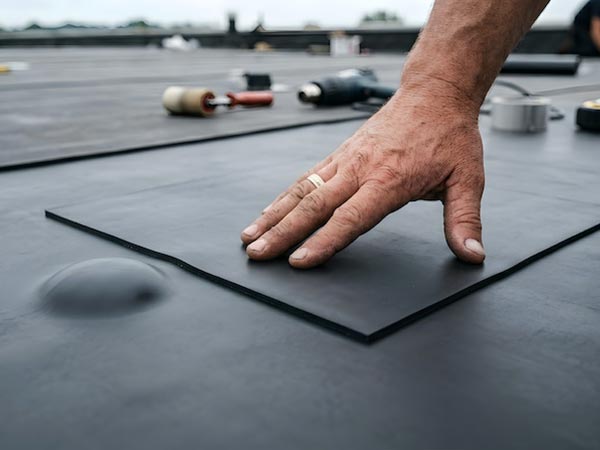
EPDM is a black rubber membrane, technically ethylene propylene diene monomer, and it has protected flat roofs for decades. What sets it apart from the white thermoplastic sheets on newer buildings is simple. Where TPO and PVC reflect sunlight, EPDM absorbs it. Grand Prairie’s big-box retail and distribution buildings clearly illustrate that contrast.
That one difference drives most of the comparison that follows. It shapes how the roof handles heat, how it ages, and where it earns its place. Everything else is a matter of degree, so it makes sense to start with the heat.
Heat and UV Performance of EPDM Roofing
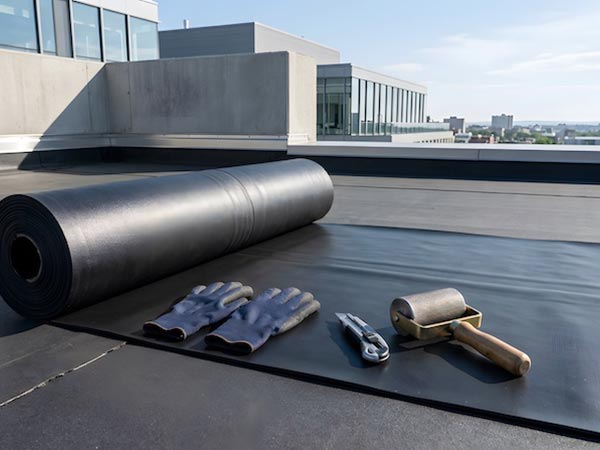
Black EPDM soaks up solar heat, which pushes rooftop temperatures higher and adds to the cooling load on a sun-baked building. White TPO and PVC reflect much of that energy instead. In a market where summers run this long, that gap matters for any building running air conditioning for months at a stretch. A distribution center running coolers and dock doors feels every degree the roof gives up.
EPDM still handles UV exposure well and resists breakdown over a long service life. The rubber stays flexible and holds its shape through years of sun. The tradeoff is heat gain, not durability, and the next real difference shows up at the seams.
Seam Strength Sets EPDM Roofing Apart
EPDM seams are bonded with adhesives or seam tape, a proven method that installs cleanly. TPO and PVC seams are welded with hot air into a single fused bond. Both hold water, but the welded seam gives thermoplastic systems an edge in how long that bond lasts. On a sprawling warehouse roof with hundreds of feet of seam, that longevity is not a small thing.
Seams are where most flat roofs eventually fail, so the method carries real weight over the decades a roof is in service. A well-made EPDM seam performs for years, though it leans on the adhesive rather than a weld. For an owner, that question ties straight to where water tends to get in, which is the next thing worth comparing.
Ponding Water and Chemical Resistance
EPDM performs strongly where water tends to collect, holding up on roofs with slower drainage. PVC stands out where grease and chemicals reach the roof, which suits restaurants and certain industrial tenants. TPO lands between the two on both counts. A food-processing tenant with wash-down and grease is a textbook case for PVC over EPDM.
So the tenant and the drainage both belong in the decision. A building with a kitchen exhaust has different needs than a dry warehouse. Comparing EPDM roofing this way is not about crowning a winner. It is about matching the membrane to what your building actually deals with.
EPDM Roofing Experts
The right system depends on your roof’s slope, your tenants, and how much heat you want to keep out. EPDM roofing fits some Grand Prairie buildings well and is the wrong call for others. Anderson Industrial Roofing can look at your roof and lay the options side by side. For EPDM Roofing in Grand Prairie, TX, contact Anderson Industrial Roofing at (866) 949-8016 today.
FAQ
Is EPDM roofing cheaper than TPO or PVC?
EPDM often carries a lower material cost, though the better value depends on your building. Reflectivity, seam type, and drainage all factor into the total picture.
Does EPDM roofing work in hot Texas weather?
It does, and it resists UV breakdown well. The main tradeoff is that its black surface absorbs heat rather than reflecting it like a white membrane.
How long does an EPDM roof last in the DFW area?
A well-installed EPDM membrane can protect a commercial building for decades in DFW, especially when its seams and flashings are inspected and maintained over time.