

Irving commercial property owners evaluating roofing bids regularly encounter a practical question: is this a commercial flat roof specialist or a general contractor who also does commercial work? The distinction between these two types of commercial roofers matters more than it might appear, and understanding where the differences show up in practice helps property owners make better decisions before a project begins.
Call Anderson Industrial Roofing at (866) 949-8016 for commercial roofers in Irving, TX.
 System Knowledge: Where Specialists and Generalists Diverge
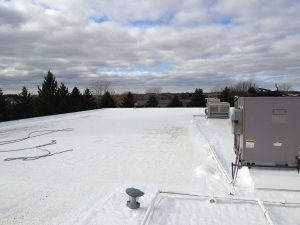
Commercial flat roofing involves a distinct set of membrane systems that behave differently from residential roofing materials and from each other. TPO, EPDM, PVC, modified bitumen, and spray-applied coatings each have specific installation requirements, failure patterns, and repair methods. A commercial flat roof specialist works with these systems consistently and develops the pattern recognition to diagnose which system is in place, what its current condition means, and what the correct repair or installation approach is for that specific membrane.
General contractors who take on commercial roofing projects as one of many service types often apply a narrower set of techniques regardless of the system in place. This can result in repairs using incompatible materials, coatings applied over surfaces that should have been repaired first, or seam work executed in a way that produces an initial seal but fails earlier than a properly executed seam would. The difference shows up not at project completion but over the years that follow, when repair frequency and membrane longevity diverge between well-specified and poorly-specified work.
Seam Execution and Drainage Design: The Technical Gap
Heat-welded seams on thermoplastic membranes are one of the clearest areas where commercial flat roof experience separates specialist work from generalist work. A properly welded TPO or PVC seam, executed at the right temperature and pressure across its full length, creates a bond that is stronger than the surrounding membrane. A seam welded at the wrong settings, rushed through sections, or left incompletely fused may look complete at installation but will separate under thermal stress or water load faster than the membrane itself would fail.
Drainage design during reroofing projects is a second area where specialist knowledge produces measurably different outcomes. Commercial roofers who have extensive flat roof experience understand how to evaluate an existing drainage layout, identify where slope is inadequate, recommend drain repositioning when ponding is a documented problem, and coordinate penetration relocation to support proper water management on the finished system. Generalists without this background are more likely to replicate the drainage conditions of the existing roof rather than correct the problems that shortened its life.
 Ongoing Service Capability: The Full-Lifecycle Difference
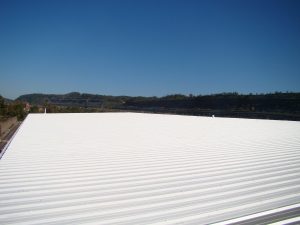
Commercial flat roof specialists in Irving typically offer a broader ongoing service capability than general contractors doing commercial work. Scheduled inspections, maintenance programs, coating applications, and repair services covering the full range of membrane types are part of standard commercial flat roof operations. This full-lifecycle capability means a property owner can manage the roof through its entire service life with a single contractor who understands the building’s history.
General contractors available for initial installation or large replacement projects often lack the field crew and scheduling infrastructure for ongoing maintenance visits. This creates a gap in the service relationship that forces Irving property owners to source different contractors for different tasks, losing the documentation continuity and building familiarity that make each subsequent service visit more effective than the last. For commercial buildings managed over a decade or more, this difference in ongoing capability compounds into a meaningful difference in total roofing outcome.
Expert Irving Commercial Roofers
The distinction between commercial flat roof specialists and general contractors becomes most visible over time, through repair frequency, membrane longevity, and the quality of ongoing service available after the initial project is complete. For Irving commercial property owners, understanding that distinction before selecting a contractor produces better outcomes than discovering it after the fact. For commercial roofers in Irving, TX contact Anderson Industrial Roofing at (866) 949-8016 today.
FAQ
What is the practical difference between commercial roofers who specialize in flat roofs and general contractors who do commercial roofing in Irving?
The most practical differences appear in system knowledge depth, seam execution quality on thermoplastic membranes, drainage design during reroofing, and ongoing service capability. Flat roof specialists work with a narrower set of systems more consistently, developing pattern recognition and technical skill that generalists who rotate between residential, commercial, and other building types cannot replicate at the same depth.
How does seam execution differ between commercial flat roof specialists and generalists in Irving?
Heat-welded seams on TPO and PVC membranes require specific temperature, pressure, and speed settings to achieve full fusion across the seam width. Specialists who weld these seams regularly develop the technique and quality-check habits to produce seams that hold for the life of the membrane. Generalists without extensive flat roof experience are more likely to produce inconsistent welds that fail earlier, typically during the first or second season of significant thermal cycling.
Can I use a general contractor for a large commercial roofing project in Irving and then switch to a specialist for ongoing maintenance?
You can, but the transition involves a loss of documented installation history that would otherwise inform future maintenance decisions. A specialist who installs a roof and then maintains it knows exactly what materials are in place, how the installation was executed, and what conditions existed at project completion. Starting maintenance with a different contractor requires rebuilding that knowledge from scratch at each visit, which is less efficient and more likely to result in missed developing issues.