

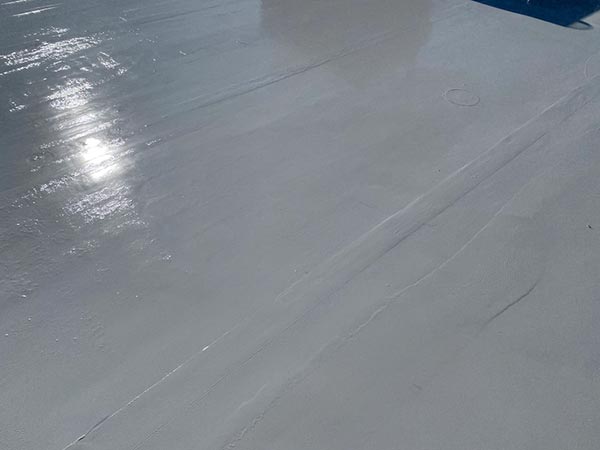
McKinney commercial buildings face heavy spring storms, long stretches of summer heat, and the occasional pool of standing water after a downpour. A roof coating gives an existing flat roof a renewed waterproof surface without the cost and downtime of a full tear-off.
Anderson Industrial Roofing has helped North Texas property owners protect aging membranes this way for years. Call Anderson Industrial Roofing at (866) 949-8016 for roof coating in McKinney, TX.
Roof Coating Restores the Water Barrier
A roof coating is a liquid-applied layer that cures into a continuous, seamless skin over your existing roof. Once it cures, it bonds to the surface below and seals the small gaps where water usually finds its way in. The result is a single unbroken barrier instead of a field of separate panels and laps.
The places where water attacks first are rarely the open field of the roof. They are the seams, the flashing at walls and curbs, and the spots around drains and rooftop equipment. A coating flows into these transitions and ties them together, sealing the weak points a worn membrane can no longer hold.
Because the coating goes on as a fluid, it reaches details that sheet materials struggle to wrap cleanly. That continuous coverage is what turns a tired roof back into one that keeps water out.
How Different Roof Coatings Handle Water
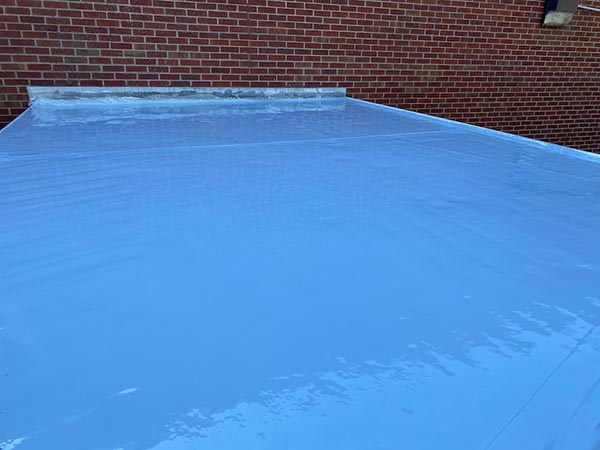
Not every coating behaves the same way once the rain starts. Silicone coatings hold up especially well under standing water, which matters on McKinney flat roofs where slow drainage can leave ponding after a storm. Silicone does not break down when water sits on it for long stretches, so low spots stay protected.
Acrylic coatings shed water well and reflect heat, which suits roofs that drain properly and see long runs of Texas sun. They perform best where water moves off quickly rather than pooling for days. Choosing between the two comes down to how your roof drains and how much ponding it sees through a wet season.
Humidity cycles matter too. North Texas swings between damp mornings and dry afternoons, and a good coating stays flexible through that movement instead of cracking. A coating that keeps its stretch keeps its seal.
Keeping the Waterproof Barrier Strong Over Time
A coating’s waterproof performance is strongest in its early years and slowly wears as sun and weather thin the surface. This is normal. The film gives up a little thickness each season, and eventually it reaches the point where it needs attention to keep doing its job.
The best approach is to recoat before the barrier is worn out, usually near the end of the warranty period. A fresh top layer bonds to the existing coating and renews the waterproof surface without starting over. Waiting until leaks appear means water has already reached the layers below, which is a harder and more expensive fix.
Regular inspection tells you where you stand. Checking the coating at seams and drains each year shows whether the surface is holding or whether it is time to plan a recoat.
McKinney Roof Coating Experts
A roof coating is one of the most practical ways to extend the life of a commercial flat roof in McKinney and keep water where it belongs. The right product, applied over a sound surface and maintained on schedule, provides years of dependable protection.
For roof coating in McKinney, TX, contact Anderson Industrial Roofing at (866) 949-8016 today.
FAQ
How does a roof coating improve waterproofing on an existing commercial flat roof in McKinney, TX?
It cures into a seamless layer over the current membrane, sealing seams, flashing, and penetrations into one continuous surface so water no longer has separate joints to work through.
Which coating holds up better under ponding water in North Texas?
Silicone generally performs best where water sits, since it resists standing moisture without breaking down. Acrylic suits roofs that drain quickly and get long sun exposure.
Can a roof coating go over a membrane that already has minor leaks?
Those spots should be repaired first. A coating seals a sound surface well, but active leaks and wet insulation need to be corrected before the new layer goes on.