

If you own a commercial building in McKinney and are researching a new flat roof, you’ve probably come across the term “single-ply.” Single-ply roofers install the flexible membrane systems that cover most low-slope commercial buildings today.
Anderson Industrial Roofing works with McKinney property owners to match the right system to the building. Call Anderson Industrial Roofing at (866) 949-8016 for single-ply roofers in McKinney, TX.
Understanding the Job of Single-Ply Roofers
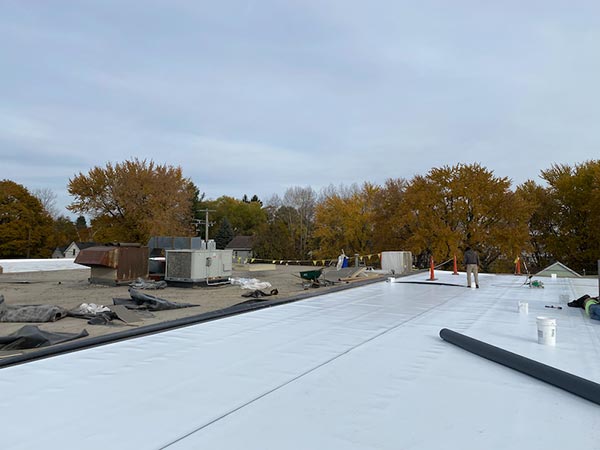
Single-ply refers to a roof built from one layer of flexible membrane, rolled out and sealed into a continuous surface. It differs from older built-up and modified bitumen roofs, which stack multiple layers of asphalt and reinforcement. A single membrane means fewer layers that can fail and a lighter load on the building.
There are three main membrane types. TPO is a light-colored sheet that reflects heat, a real advantage under McKinney summers. EPDM is a rubber membrane known for long, dependable service and flexibility in temperature swings. PVC is a chemical-resistant sheet often chosen for roofs near kitchen exhaust or industrial fumes.
Each behaves differently, but all three share the single-ply advantage: one continuous, waterproof layer instead of many. That single layer is a large part of why single-ply has become the default for new low-slope commercial roofs.
3 Methods to Attach Single-Ply Membranes
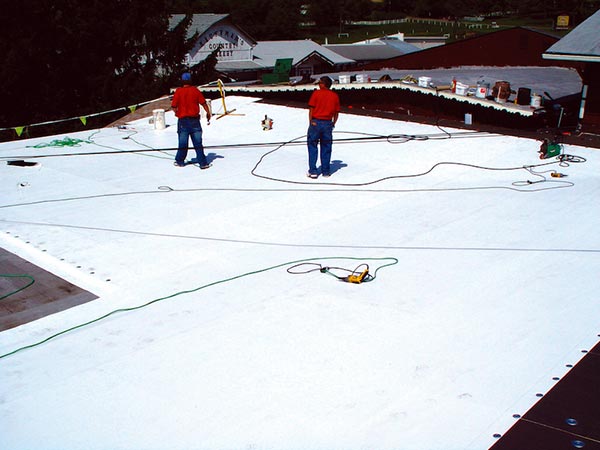
The membrane type is only half the picture. How single-ply roofers attach it shapes how the roof performs, and there are three common methods.
Fully adhered means the membrane is glued directly to the insulation below, creating a smooth, low-profile surface that handles wind well. Mechanically attached uses fasteners and plates to hold the sheet down, with the seams welded on top, which is efficient and economical. A ballasted system lays the membrane loose and holds it in place with stone or pavers, though it is less common on the buildings around McKinney.
The right method depends on the building’s height, its exposure to wind, and the deck underneath. A good roofer walks you through why one fits your roof better than another. On many McKinney buildings, wind uplift is the deciding factor, since a roof that catches strong gusts needs an attachment method rated to hold.
Ask Single-Ply Roofers The Right Questions
Before approving a roofing project, asking a few questions can tell you a lot. Ask which membrane type the roofer recommends and why it suits your building’s use and drainage. Ask how the seams will be joined, since welded seams are the backbone of a single-ply roof’s waterproofing.
Ask about the attachment method and how it handles the wind loads common to North Texas. Ask what warranty covers both the material and the workmanship, and what maintenance keeps that warranty valid. Clear answers signal a roofer who installs these systems regularly.
The goal is not to become an expert yourself, only to know enough to judge whether the plan fits the building. A roofer who answers these plainly, without pushing one system for every job, is usually the one worth trusting.
Expert McKinney Single-Ply Roofers
Single-ply systems suit the flat and low-slope commercial buildings that fill the McKinney market, and the right membrane and attachment method make a significant difference in how long the roof lasts. A knowledgeable installer helps you weigh those choices with confidence.
For single-ply roofers in McKinney, TX, contact Anderson Industrial Roofing at (866) 949-8016 today.
FAQ
What is a single-ply roofing membrane and how is it different from built-up roofing?
It is a single flexible sheet sealed into one waterproof layer. Built-up roofing stacks several layers of asphalt and felt, so single-ply is lighter and has fewer layers to fail.
What are the differences between TPO, EPDM, and PVC membranes?
TPO is reflective and energy-friendly, EPDM is a durable rubber that flexes well in temperature swings, and PVC resists chemicals and grease, which suits roofs near exhaust vents.
Does the attachment method affect performance?
Yes. Fully adhered resists wind with a low profile, mechanically attached is efficient and economical, and ballasted holds the sheet with weight. The best choice depends on the building’s height, wind exposure, and deck.