

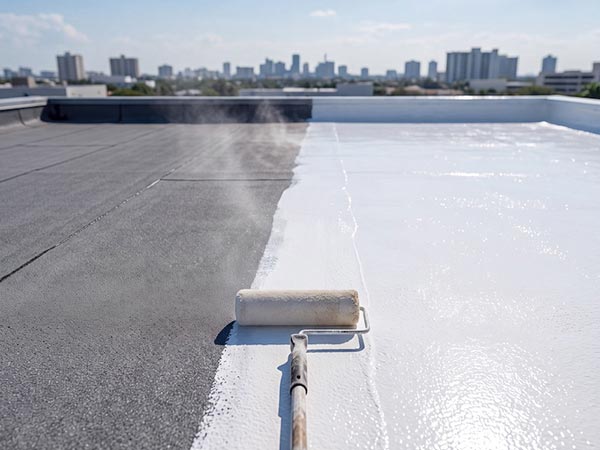
Many commercial roofs in Grand Prairie, TX show signs of age without requiring a complete replacement. When the roof surface is worn but the insulation remains dry and the underlying deck is structurally sound, roof restoration can renew the system’s protective surface and help prevent water intrusion.
Anderson Industrial Roofing handles roof restoration for commercial properties in Grand Prairie, TX. Call (866) 949-8016 to determine whether your existing roof is a good candidate for restoration.
Restoring a structurally sound roof can extend its service life, strengthen waterproofing, and help property owners delay the cost and disruption of a full replacement.
Roof Restoration Rebuilds the Waterproof Layer
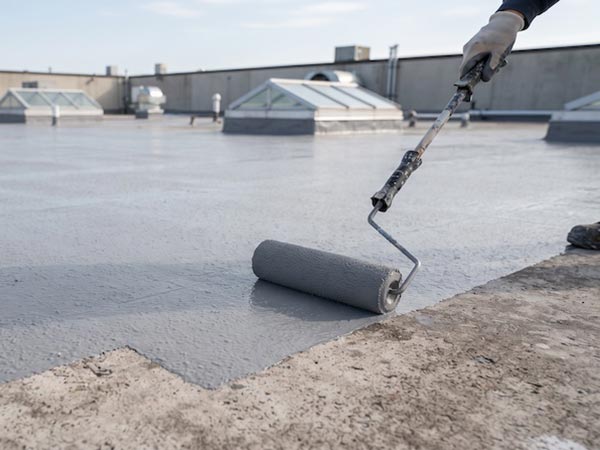
Roof restoration means cleaning an existing membrane, repairing its defects, and applying a continuous coating that becomes the new waterproof surface. It is the option for a roof that is worn but structurally sound.
An aging membrane rarely loses waterproofing all at once. It loses it gradually, through small openings that appear faster than anyone repairs them.
That is the practical difference from patching. A patch addresses the leaks you found, while a coating spans seams, fasteners, and worn areas together, including the ones that have not announced themselves yet.
Aging Membranes Leak at Predictable Places
Three failure points account for most leaks on an aging flat roof: eroded surface, fatigued seams, and degraded sealant at penetrations.
Surface erosion comes first, as years of UV exposure thin the top of the membrane and expose layers meant to sit protected. Seams follow, since daily expansion and contraction works the laps until small pathways open.
Sealant at flashings and penetrations produces the first real leak. Around curbs, pipes, and parapet walls it shrinks and pulls away from the substrate, and each of those points becomes an entry. Together they turn a sound roof into one leaking in several places at once.
Roof Restoration Seals Erosion and Seam Fatigue
A restoration coating fills eroded surface and bonds over early seam separation, putting waterproofing back at the exact points most likely to fail. Reinforcing fabric goes down at seams, flashings, and penetrations before the field coat is applied.
The result is a seamless surface with no laps for water to work at. On buildings that see the heavy rain and occasional ponding common across the DFW area, that continuity is the whole point.
Reflectivity comes with it. A light-colored coating returns a large share of solar energy rather than storing it, lowering surface temperature through a Texas summer and slowing the thermal movement that opened those seams.
Recoating Comes Before Failure, Not After
A restored roof may eventually need to be recoated as the protective surface wears, often many years after the original restoration. When the underlying system remains in suitable condition, recoating is generally a less extensive process than the initial restoration.
Roof coatings gradually weather and lose thickness under continued UV and environmental exposure. Addressing this wear before the protective layer becomes compromised helps prevent moisture from reaching the underlying membrane and creating more extensive problems.
Planning for recoating while the restored surface remains in good condition can help extend the roof’s service life and keep the system on a manageable maintenance cycle. With regular inspections and timely recoating, building owners may be able to postpone the cost and disruption of a complete tear-off for many years.
Roof Restoration Extends Grand Prairie Roofs
For commercial property owners with a worn but structurally sound roof, restoration offers a practical way to renew waterproofing performance without the disruption of a complete replacement. The process creates a continuous protective surface over the existing roof, helping address widespread wear while allowing normal building operations to continue.
Anderson Industrial Roofing handles roof restoration in Grand Prairie, TX. Call (866) 949-8016 today to schedule a 25-point inspection and determine whether your commercial roof is a good candidate for restoration.
Addressing an aging roof while the insulation remains dry can extend its service life, improve waterproofing, and help delay the expense of a full replacement.
FAQ
Can a commercial roof be restored if it already leaks?
Usually yes, provided the leaks are limited and the insulation below is mostly dry. Wet sections are cut out and replaced before any coating goes on.
How do I know if my roof qualifies for restoration instead of replacement?
A moisture survey is the deciding test. If saturation covers only a small share of the roof and the deck is sound, restoration is generally the better financial choice.
How long does a restored commercial roof last before recoating?
Most coating systems carry warranties in the 10 to 20 year range. Recoating at the end of that term, while the surface is still intact, resets the cycle.