


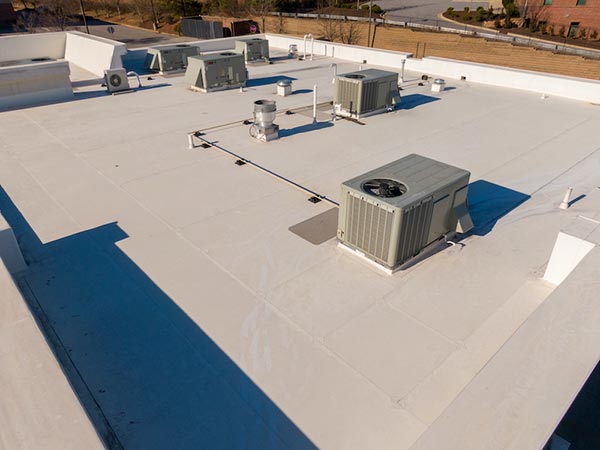
Grand Prairie building owners often choose a single-ply roof for its energy performance, then discover that two buildings with the same membrane can post very different utility numbers. The gap usually traces back to installation. The single-ply roofers on the job make a series of decisions that determine how the finished assembly actually performs.
Call Anderson Industrial Roofing at (866) 949-8016 for single-ply roofers in Grand Prairie, TX.
Single-Ply Roofers Shape Long-Term Energy Costs
A product data sheet describes what a membrane can do under test conditions. What a building receives depends on how the system goes down on the deck.
Color, attachment method, seam quality, and drainage all carry part of that weight. Color is the one everyone notices, so it makes sense to start there.
Membrane Color
Solar reflectance is the share of sunlight a surface sends back rather than absorbs. A white single-ply membrane reflects most of it. A dark surface absorbs it and passes the heat into the assembly.
In Grand Prairie, the cooling season runs long, and rooftop surface temperatures on a dark membrane can climb far past ambient air. Reflecting that energy before it enters the roof reduces the load the mechanical system has to remove. On a warehouse or plant with a large roof relative to its wall area, the roof is the dominant surface, so this choice carries more weight here than it would on a taller, narrower building. Owners often see the difference most clearly in the first full summer after the work is done. Installation decisions beneath the membrane also influence long-term performance.
Attachment Choices Single-Ply Roofers Make
A membrane can be held down mechanically with fasteners and plates or fully adhered with adhesive across the whole surface. Both are legitimate, and the right answer depends on the deck, the wind exposure, and the budget.
The energy difference comes from thermal bridging. Mechanical fasteners can create localized thermal bridges through the insulation, although the overall effect depends on the fastener and insulation design. A fully adhered assembly avoids those particular fastener penetrations, which can help maintain more consistent insulation performance.
Seams and Drainage Choices by Single-Ply Roofers
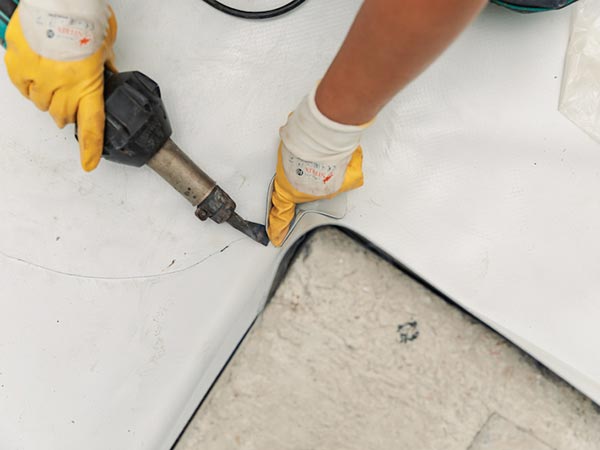
Single-ply seams are heat welded, fusing two sheets into one continuous surface. A properly welded seam keeps air from moving through the assembly. A weak or incomplete weld can allow water to enter the roofing assembly and compromise the protection provided by the membrane.
Drainage matters for a related reason. Ponding water can place additional stress on the roof system and contribute to membrane deterioration over time. Adequate slope and correctly sized drains clear the surface quickly. Both details are execution items, decided on the roof rather than in the specification.
Choosing Single-Ply Roofers for Energy Performance
Energy performance is not settled when the membrane is selected. It is settled during installation, in the attachment method, the weld quality, and the drainage layout. Asking single-ply roofers to explain those choices, and why they recommend one approach over another for your building, tells you a great deal about the result you will get. A contractor who can walk through the reasoning has usually done the work often enough to get it right.
For single-ply roofers in Grand Prairie, TX, contact Anderson Industrial Roofing at (866) 949-8016 today.
FAQ
How long does a single-ply roof last on a commercial building in Texas?
Well-installed systems commonly serve two decades or more. Heat and ultraviolet exposure in North Texas make regular inspections and maintenance especially important for maximizing service life.
Does a white roof membrane stay white in Texas?
It collects dust and darkens over time, which reduces reflectance somewhat. Periodic cleaning can help maintain reflectivity by removing accumulated dirt and debris.
Can single-ply roofing be installed over an existing roof?
Sometimes, if the existing assembly is dry and structurally sound. A moisture survey determines whether an overlay is acceptable.