

The decisions commercial roofers make on a Dallas flat roof project, from membrane selection to attachment method to drainage design, directly affects how much energy the building uses to stay cool during North Texas’s long summer season. Understanding how these choices connect to energy performance helps property owners ask more informed questions before a project begins and evaluate bids on more than price alone. Call
For related commercial roofing guidance in Dallas, see flat roof replacement in Dallas and tpo roof repair in Dallas.
Anderson Industrial Roofing at (866) 949-8016 for commercial roofers in Dallas, TX.
 Membrane Selection and Its Effect on Dallas Building Energy Use
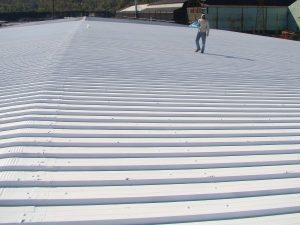
The roofing membrane that commercial roofers specify for a Dallas flat roof has a measurable effect on how much solar energy enters the building below. Dark membranes absorb a high percentage of the solar radiation that reaches the roof surface, converting it to heat that conducts through the roofing assembly and adds to the cooling load the HVAC system must manage. White and light-colored thermoplastic membranes reflect a substantial portion of that radiation before it can enter the building, reducing rooftop surface temperatures and the thermal load on the space below during the months when cooling demand peaks.
For Dallas commercial buildings with large flat roof areas, this difference in solar reflectance translates into real HVAC run-hour reduction during the summer. Commercial roofers who discuss membrane color and solar reflectance index as part of a project conversation are engaging with a factor that affects the building’s operating costs year after year, not just the one-time cost of the roofing project itself. Owners who ask about reflectance values when reviewing bids can make more informed decisions about which system delivers the better long-term value for their building.
Attachment Method, Insulation, and Thermal Performance
Beyond membrane color, the attachment method commercial roofers use during installation affects the thermal continuity of the roofing assembly. Mechanically fastened systems use fasteners that penetrate through the insulation layer to anchor the membrane to the deck below. These fasteners create pathways for heat to move through the insulation more efficiently than the insulation material itself allows, reducing the effective thermal resistance of the assembly compared to what the insulation specification suggests on paper.
Fully adhered systems bond the membrane and insulation together across the full surface area without penetrating fasteners, maintaining the insulation’s thermal resistance more consistently. For Dallas commercial buildings where the roofing assembly is a meaningful contributor to overall building envelope performance, the attachment method commercial roofers use is a factor worth discussing alongside membrane specification. Roofers who can explain this trade-off are bringing relevant technical perspective to the energy performance question, not just a materials list.
Commercial Roofer Workmanship Determines Energy Performance
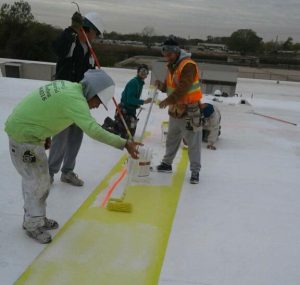 The energy performance potential of any roofing specification is only realized if the installation is executed correctly. Reflective membranes deliver their expected solar reflectance only when they are applied at the specified film thickness across the entire roof area. Insulation delivers its rated thermal resistance only when it is installed without voids, compression, or moisture intrusion at the time of application. Heat-welded seams maintain the thermal envelope of the assembly only when they are fully fused across their complete length, rather than partially welded in sections that allow air infiltration around the bond.
Commercial roofers who understand these workmanship-to-performance connections execute details that a property owner rarely sees but that determine whether the promised energy performance of a system is actually delivered. Inspecting seams, verifying insulation coverage, and confirming drainage design during installation are the practices that bridge the gap between a specification that looks good on paper and a finished roof that performs as the specification projects.
Quality Commercial Roofers in Dallas, TX
The energy performance of a Dallas commercial flat roof is shaped by membrane selection, attachment method, insulation continuity, and installation quality in ways that compound across the building’s operating life. Commercial roofers who engage with these factors, rather than treating them as secondary to price, deliver projects that perform better over time for Dallas property owners. For commercial roofers in Dallas, TX contact Anderson Industrial Roofing at (866) 949-8016 today.
FAQ
How does the membrane commercial roofers choose affect energy costs on a Dallas commercial building?
White and light-colored thermoplastic membranes reflect a significant portion of solar radiation away from the roof surface before it converts to heat, reducing rooftop temperatures and the cooling load the HVAC system must manage during Dallas summers. Dark membranes absorb that radiation instead, adding to the building’s cooling demand over the months when energy costs run highest. Commercial roofers who discuss solar reflectance index as part of a specification conversation are addressing a factor that affects operating costs year after year.
Why does the attachment method commercial roofers use matter for building energy performance?
Mechanically fastened systems use fasteners that penetrate the insulation layer, creating pathways for heat transfer through the roofing assembly that reduce the effective thermal resistance of the insulation compared to its rated value. Fully adhered systems maintain insulation performance more consistently by bonding across the full surface area without penetrating fasteners. For Dallas buildings where rooftop thermal performance matters, the attachment method is worth asking commercial roofers to explain alongside membrane specification.
How does installation quality affect the energy performance commercial roofers promise on a Dallas roofing project?
A reflective membrane only delivers its expected solar reflectance when applied uniformly at the specified thickness. Insulation only delivers its rated resistance when installed without voids or moisture. Heat-welded seams only maintain the thermal envelope when fully fused across their complete length. Commercial roofers who verify these conditions during installation are the ones who deliver the energy performance the specification projects, rather than simply meeting the minimum visible requirements of project completion.